
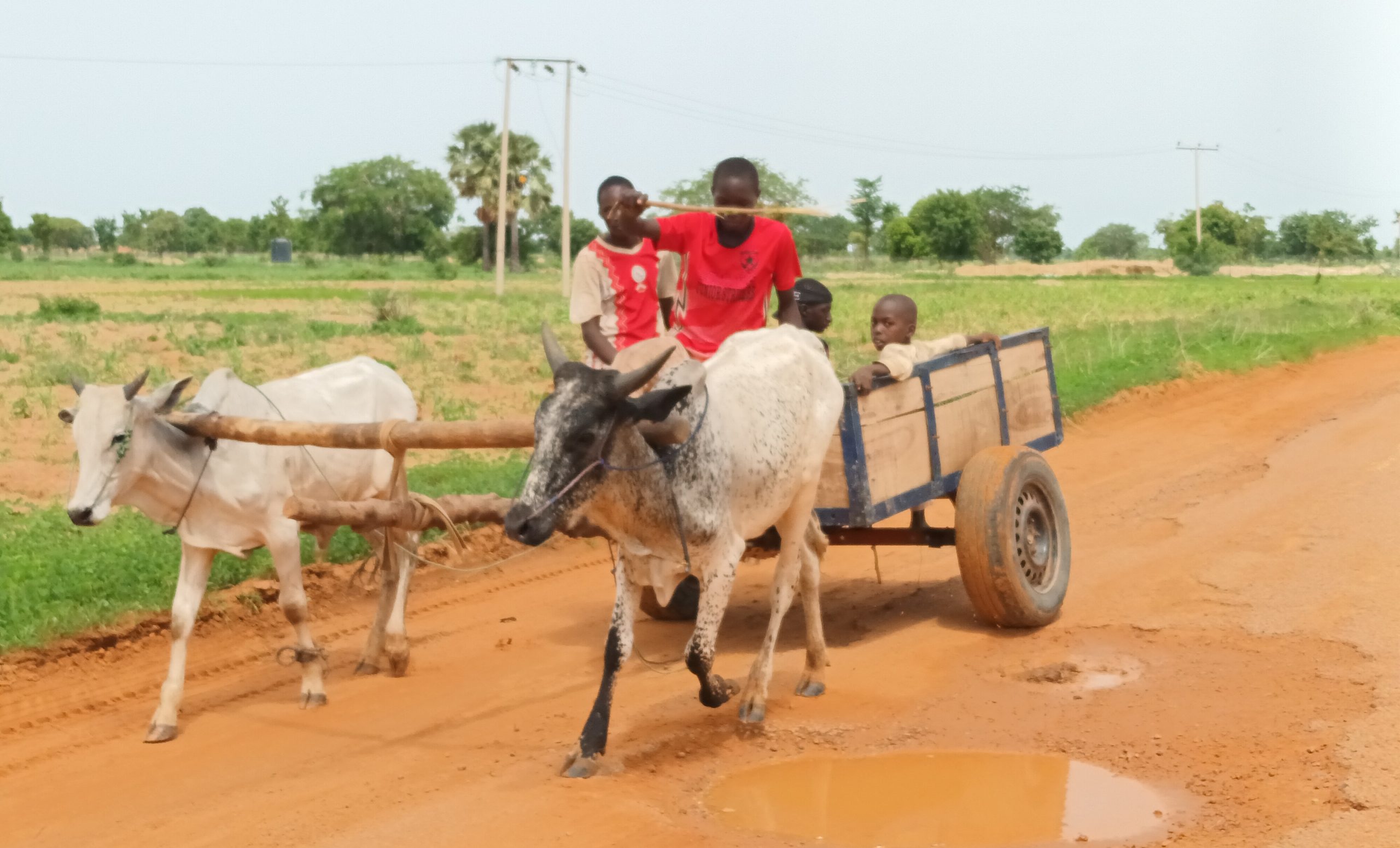
In today’s world, roads are essential lifelines, connecting people to crucial services, opportunities, and each other. However, for the residents of Joɗa community in Gabasawa Local Government Area of Kano State, the advantages of good roads remain an elusive dream.
The community, home to over 5,000 people, is plagued by poor infrastructure, significantly impacting their health, education, and overall well-being.
Joɗa’s deteriorating roads have led to numerous tragedies, particularly affecting pregnant women and children. Many have died either at home under the care of local midwives or en route to hospitals in Zakirai or Gezawa.

The lack of a senior secondary school and substandard primary healthcare further exacerbate the community’s struggles.
Baffa Abdulwahab Joɗa, a community leader, voiced his concerns in an interview with CITAD Radio. “Our children, especially the girls, dream of continuing their education up to university or college. But without a senior secondary school in our village and the high cost of transport, many of these dreams are being crushed,” he said. “We need the government to intervene and provide us with the necessary infrastructure.”
The lack of educational facilities in Joɗa is particularly troubling for the youth. “Our young people are the future, but they are being denied the opportunity to learn and grow,” Baffa Abdulwahab stressed. “If this continues, we risk losing a whole generation of potential professionals who could significantly contribute to the development of our area and Kano State at large.”

Kabu Gambo Joɗa, a youth leader, highlighted the unfulfilled promises of politicians. “During campaigns, politicians like Senator Barau Jibrin promise to repair the road, but after their victory, they do not fulfill their promises,” he said.

“The road has not been repaired in over 25 years. The current member representing Gabasawa and Gezawa at the National Assembly, Hon. Muhammad Na Laraba Chiroma, and Senator Barau Jibrin promised to construct the road but have ignored the promise despite our reminders.”
Kabu Gambo also recounted a recent incident where a community member, Aminu Illah Joɗa, was arrested for criticizing the National Assembly member on social media. “After consensus and the elders begged the Hon. Member, he ordered Aminu’s release after more than ten hours in police custody,” he explained.

Zulaihat Baffa Joɗa is one of many girls in the community who dream of completing her secondary education and continuing to university, aspiring to become a nurse or medical doctor. Unfortunately, her dream is currently unattainable.

“My ambition is to become a nurse or a medical doctor, but due to the lack of a senior secondary school in Joɗa, my dream remains elusive. I cannot afford to attend the senior secondary school in Zugachi because of financial constraints and the poor road linking our villages to the school,” she said.

Another resident, Alhaji Sa’adu Bello Joɗa, stated that the existing junior secondary school in Joɗa was initially established by the community. The government later constructed one block and converted it into a junior secondary school with the community’s permission.
“This junior secondary school was originally an Islamiyya school that we built,” he lamented. “The government then constructed one block and, with our permission, converted it into a junior secondary school.”


The lack of infrastructure extends beyond roads and education. Health outcomes in Joɗa have also suffered. Maternal deaths are a tragic reality, as pregnant women face difficulties reaching hospitals on time for delivery.
Speaking with CITAD Radio about the poor condition of the road, Aina’u Joɗa, a mother, recounted how the hazardous route has worsened many pregnancy cases before reaching the hospital, located just a few kilometers from the village. She noted that some women were forced to give birth on the road, while others tragically did not survive the journey.
“Our hospital is small and does not support child delivery services, which is why women in this village have to travel all the way to Zakirai Primary Health Care Centre for such services.


“Because of the nature of the road, pregnant women die before getting to the hospital, while others give birth on the road,” she said.
Muhammad Ibro Joɗa, who has used his car for years to transport pregnant women to hospitals in Zakirai or Gezawa, shared his heartbreak. “We have lost too many mothers and children because of the bad roads and the distance to the nearest hospital,” he lamented. “It is heartbreaking and avoidable if only we had better infrastructure.”

Muhammad Ibro Joɗa emphasized the community’s plea for basic necessities. “We are not asking for luxury; we are asking for basic necessities that many take for granted,” he said. “Our children deserve the chance to complete their education without facing such obstacles, and our women deserve to give birth in safe conditions.”
CITAD Radio has reported that the eight-kilometer road from Zugachi to Joɗa Village has been in an impassable condition for over years. Despite numerous promises from politicians, especially those seeking support to become Federal and State lawmakers, the road remains neglected and in disrepair.

As the residents of Joɗa continue to endure these challenges, there remains a glimmer of hope that their voices will be heard and that appropriate solutions will be implemented to alleviate their plight and restore a sense of normalcy to their lives.