
PRESS STATEMENT
CITAD Unveils Digital Safety Toolkit, Policy Brief to Strengthen Protection for Women Human Rights Defenders in Northern Nigeria
Friday, 27 November 2026
The growing use of digital platforms for advocacy, journalism, activism and civic engagement has created new opportunities for women to participate in public discourse, document human rights violations and amplify the voices of marginalised communities. However, these opportunities have also exposed women to increasing digital threats, including online harassment, cyberstalking, impersonation, doxxing, surveillance, account compromise and other forms of technology-facilitated gender-based violence.
For women human rights defenders, journalists, feminist organisers and community advocates, these threats go beyond the digital space. They can undermine personal safety, restrict freedom of expression, discourage civic participation and weaken efforts to promote human rights and social justice.
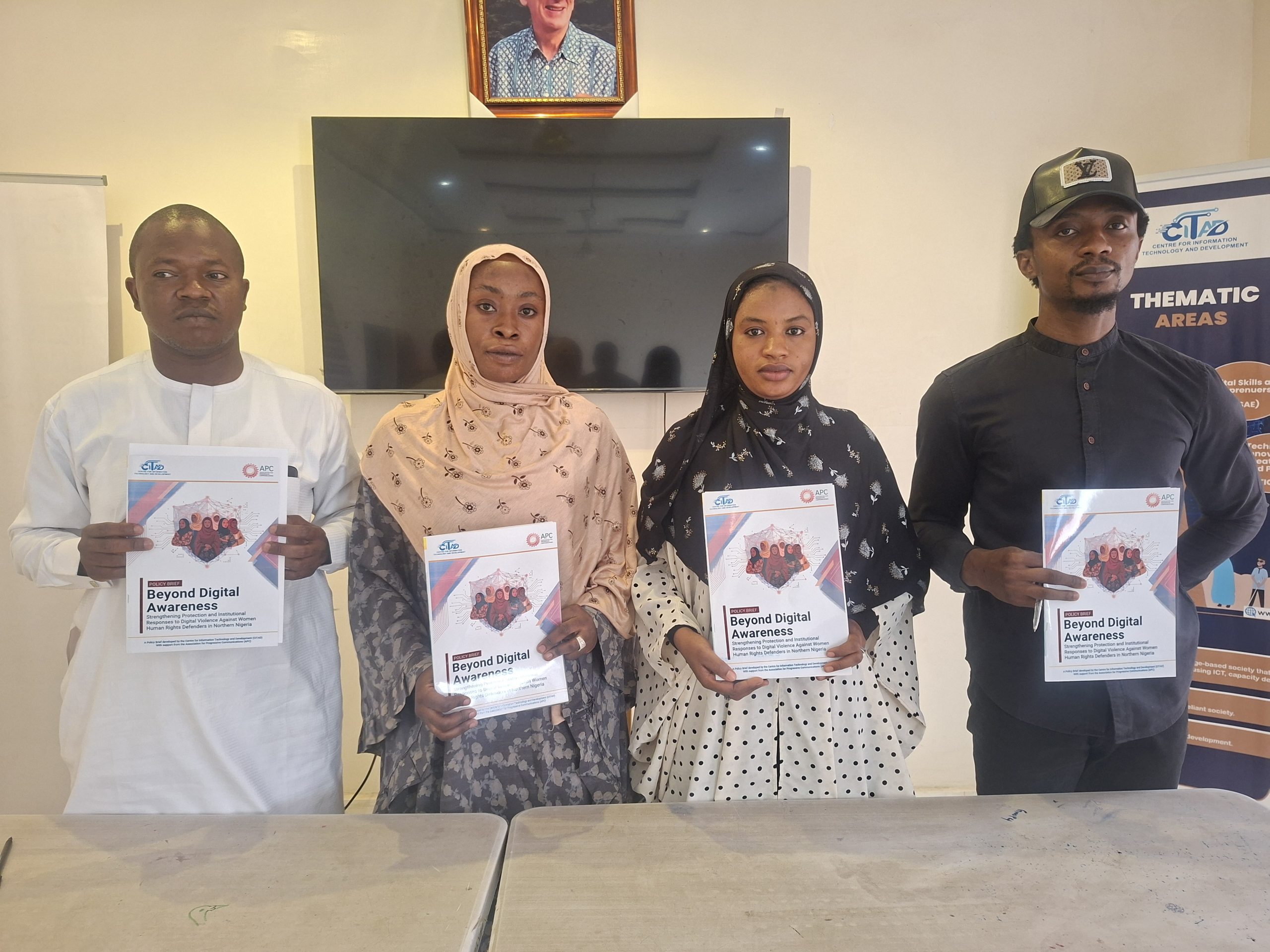
It is against this background that the Centre for Information Technology and Development (CITAD), with support from the Association for Progressive Communications (APC), is officially unveiling a Digital Safety Toolkit and a policy brief titled Beyond Digital Awareness, developed under its project, Strengthening Digital Safety and Collective Resilience for Women Human Rights Defenders in Northern Nigeria.
The initiative recognises that women working to defend human rights and promote accountability must be able to participate in digital spaces without fear, intimidation or abuse. It also acknowledges that digital safety requires more than individual awareness; it demands practical knowledge, accessible support systems, institutional commitment and collective responsibility.
Project Implementation and Achievements
Since the commencement of the project, CITAD has implemented activities across Kano, Jigawa and Bauchi States, reaching 60 women human rights defenders, journalists and other women advocates through practical digital safety capacity-building sessions.
The training sessions equipped participants with essential knowledge and skills in digital risk assessment, account and device protection, online privacy, secure communication, phishing and online scams, technology-facilitated gender-based violence, evidence preservation and personal digital safety planning.
Participants also explored practical approaches to identifying digital threats, responding to online abuse and protecting their identities, devices and online activities.
In addition, the project organised an experience-sharing and peer-learning session on 27 October 2026, which provided participants with an opportunity to discuss their experiences, identify common digital safety challenges and explore collective approaches to protection and support.
The discussions highlighted concerns around smartphone security, email access, application permissions, location exposure, impersonation, deepfakes and the difficulties women face when reporting digital violations. They also reinforced the importance of solidarity, trusted support networks and accessible technical, legal and psychosocial assistance for survivors.
The project’s learning assessment recorded encouraging improvements in participants’ knowledge and confidence. Average knowledge scores increased from 74 per cent to 83 per cent, while average confidence across seven digital safety skills rose from 3.1 to 4.2 out of five. Furthermore, 85 per cent of respondents reported feeling better prepared to protect themselves digitally.
These findings and experiences informed the development of the two resources being unveiled today.
Unveiling of the Digital Safety Toolkit and Policy Brief
The Digital Safety Toolkit for Women Human Rights Defenders, Feminist Organisers, Journalists and Community Advocates is designed as a practical guide to help individuals and organisations understand digital threats, assess their exposure to risks and take appropriate steps to protect themselves.
It provides guidance on securing digital devices and online accounts, protecting personal information, communicating securely, responding to online harassment, preserving digital evidence and developing personal digital safety plans. It also outlines relevant Nigerian legal frameworks for addressing digital violations and gender-based violence.
The accompanying policy brief, Beyond Digital Awareness, draws on the project’s findings and experiences to emphasise that digital safety cannot be achieved through individual awareness and training alone.
It calls for a coordinated response involving government institutions, civil society organisations, technology companies, telecommunications providers and development partners to establish stronger protection systems for women in digital spaces.
Both resources are intended to serve as reference materials for women human rights defenders, women-led organisations, journalists, civil society organisations, community advocates and members of the general public. CITAD encourages their adoption in organisational safeguarding policies, digital rights education, advocacy initiatives and everyday online safety practices.
Promoting Accessible Reporting Through Reportrix
A key component of the toolkit is the introduction of Reportrix, CITAD’s online reporting platform, accessible at https://reportrix.citad.org.ng
The platform provides an avenue for individuals to report digital rights violations, gender-based violence and other incidents requiring attention and support.
Through its dedicated reporting modules, including GBV Reports and Digital Rights, users can report incidents such as sextortion, non-consensual sharing of intimate images, impersonation, cyberstalking, doxxing, account compromise and coordinated online harassment.
Users can submit relevant information and supporting evidence to facilitate appropriate responses and referrals.
The inclusion of Reportrix reinforces an important message: knowing how to prevent digital threats must go hand in hand with knowing where and how to seek assistance when violations occur.
Call for Collective Responsibility
CITAD believes that protecting women in digital spaces is a shared responsibility that requires sustained commitment from all stakeholders.
Government institutions must strengthen existing reporting, investigation and response mechanisms for digital violations and gender-based violence. Civil society organisations must integrate digital safety into their safeguarding frameworks and support systems. Technology companies and telecommunications providers must improve accountability, platform safety and mechanisms for addressing online abuse.
Development partners must also sustain investments in programmes that strengthen the digital security, protection and wellbeing of women human rights defenders.
The unveiling of the Digital Safety Toolkit and policy brief marks an important milestone in CITAD’s efforts to promote safer and more inclusive digital spaces for women in Northern Nigeria. More importantly, it ensures that the knowledge, experiences and lessons generated through the project remain accessible beyond its implementation period.
CITAD therefore calls on women human rights defenders, journalists, women-led organisations, civil society actors, government institutions, development partners and members of the public to access, share and utilise these resources.
We must collectively ensure that digital spaces remain platforms for participation, expression, advocacy and human rights protection rather than environments where women are intimidated, silenced or exposed to abuse.
Digital safety is not a privilege; it is essential to the protection of human rights, freedom of expression and meaningful participation in society.
Thank you.
Amina Khalid Muhammad
Project Officer
Strengthening Digital Safety and Collective Resilience for Women Human Rights Defenders in Northern Nigeria