
Ali Sabo & Buhari Abba
At Government Girls’ Secondary School, Kofar Yamma, in Dawakin Kudu Local Government Area of Kano State, hundreds of schoolgirls face an uncertain learning environment as damaged classroom blocks expose them to harsh weather and reptiles, raising fears of absenteeism and possible school dropout.

For the schoolgirls of Government Girls’ Secondary School (GGSS), Kofar Yamma, attending classes has become an increasingly difficult experience.
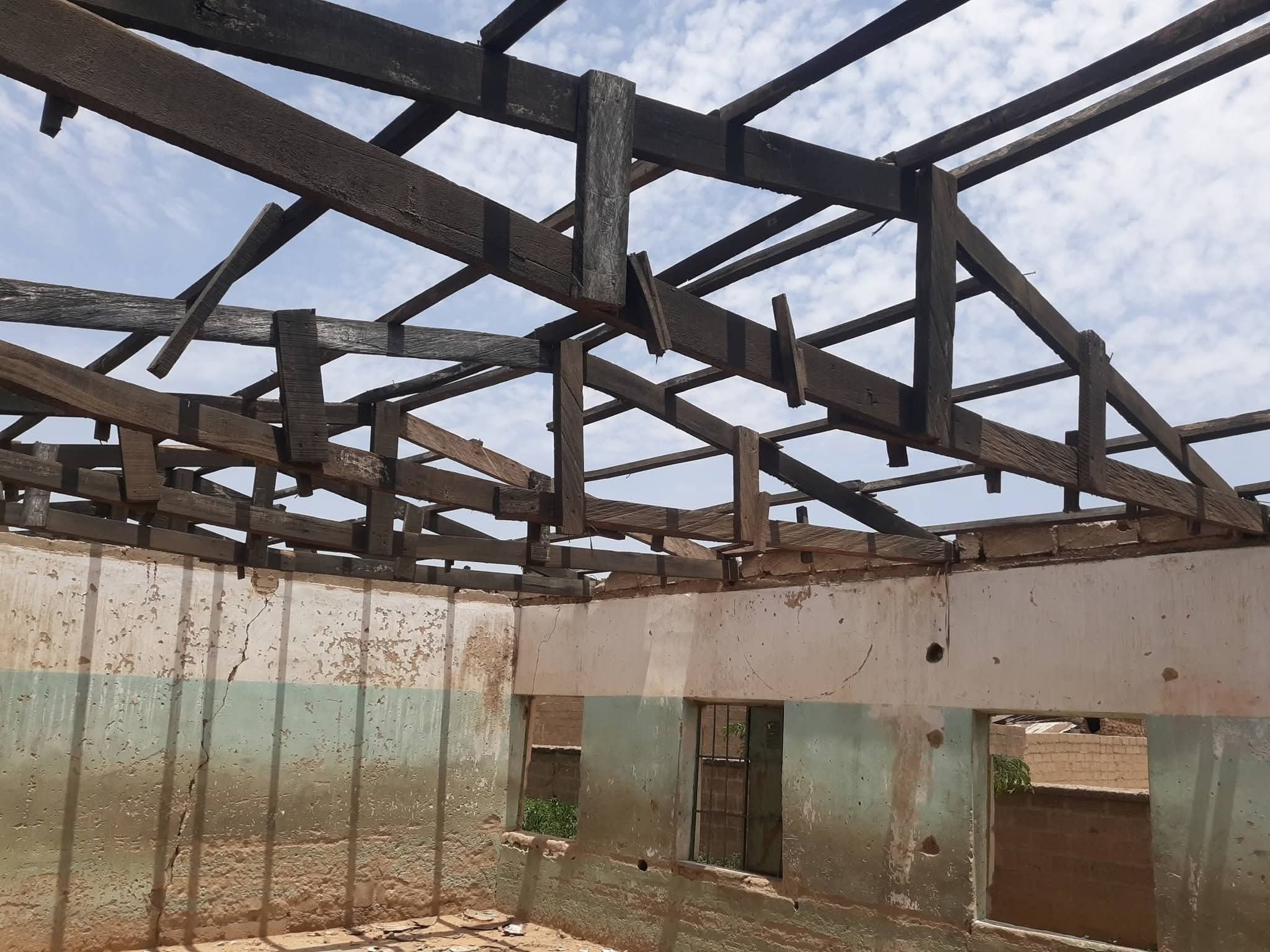
Sections of their classrooms have been left without proper roofs, exposing students to scorching sunlight and rainfall, while cracked walls and the presence of reptiles in some learning spaces have heightened concerns about their safety.

When it rains, lessons are disrupted, with some students reportedly forced to leave school early or remain at home because their classrooms cannot provide adequate protection from the weather.
For hundreds of girls enrolled in the rural secondary school, the situation threatens not only their safety but also their opportunity to receive uninterrupted education.
Parents and community members fear that continued exposure to such conditions could discourage school attendance and force some girls to abandon their education, potentially worsening Kano State’s already troubling out-of-school children crisis.
A visit to the school by CITAD Radio revealed three classroom blocks without proper roofs, cracked walls and learning spaces overtaken by lizards and other reptiles.
Some of the newer structures, reportedly constructed in 2022, have also begun to deteriorate, with subsequent rainstorms damaging sections of their roofs.

The situation has left residents questioning the maintenance of public school infrastructure and the effectiveness of government interventions aimed at improving access to quality education.
A state of emergency, but little change
The condition of GGSS Kofar Yamma has raised questions about the impact of the Kano State Government’s declaration of a state of emergency on education on June 8, 2024.
The declaration was intended to address challenges affecting the state’s education sector, including inadequate infrastructure, poor learning conditions and the growing number of children outside the school system.

However, more than two years after the declaration, residents of Kofar Yamma say their community continues to struggle with deteriorating school infrastructure.
For them, the condition of the girls’ secondary school illustrates the gap between government commitments to improve education and the realities confronting students in some rural communities.
The Kano State Government has repeatedly expressed its commitment to rebuilding the education sector through increased budgetary allocations and infrastructure interventions.
In November 2025, Governor Abba Kabir Yusuf presented a proposed N1.36 trillion budget for the 2026 fiscal year to the Kano State House of Assembly for consideration and passage.

The governor described the budget as a strategic plan to consolidate ongoing projects and accelerate development across key sectors, with education receiving N405.35 billion, representing 30 per cent of the proposed expenditure.

Similarly, Governor Yusuf approved the release of N3.77 billion for critical interventions in the education sector, covering school rehabilitation, learning materials and outstanding payments to contractors and suppliers across the state.
The approval was granted at the 35th Kano State Executive Council meeting held on December 18, 2025, as part of the administration’s efforts to revive public education and improve learning conditions in schools.
More recently, the Technical Adviser to the Governor on Education Reform, Haladu Muhammad, said the state government was rebuilding its education system from the ground up as part of broader reforms aimed at improving standards and reducing the number of out-of-school children.
Mr Muhammad stated this during a stakeholders’ engagement on the development of a 10-year education sector plan in Kano.
While these commitments indicate the government’s stated priority for education, the situation at GGSS Kofar Yamma raises questions about how such investments are reaching schools in rural communities and whether existing infrastructure challenges are receiving adequate attention.
Residents say the affected buildings require urgent rehabilitation, warning that further neglect could worsen the learning environment and discourage parents from sending their daughters to school.
Parents fear for their daughters
For parents whose daughters attend the school, the deteriorating classrooms have become a source of anxiety.
Kabiru Yusuf, whose three daughters attend the institution, said the condition of the buildings had raised serious concerns about their safety and educational future.
He said parents expected schools to provide a safe environment where children could learn without being exposed to dangerous conditions.
Mr Yusuf appealed to the government and concerned organisations to repair the damaged structures before the situation worsened.
He said allowing the buildings to remain in their current condition could discourage students from attending classes and undermine their educational progress.
Another parent, Mansur Ghali, said every child deserved access to a safe and conducive learning environment, regardless of where they lived.
“Every child deserves a safe classroom. Please help rebuild GGSS Kofar Yamma, Dawakin Kudu,” he appealed.
Tijjani Abubakar Dawaki, a youth leader in the community, also expressed concern over the condition of the school, particularly the risks facing girls who attend the institution.
He called on the Kano State Government, education authorities and other stakeholders to treat the rehabilitation of the school as an urgent priority.
Mr Dawaki said girls should not be expected to pursue their education in an environment that threatens their safety.

Students bear the consequences
While parents and community leaders have continued to raise concerns, the students are the ones directly experiencing the consequences of the deteriorating infrastructure.
For some of the girls, the poor condition of their classrooms has become a source of frustration and uncertainty about their educational ambitions.
Three SS II students interviewed by this reporter, Hauwa Suleiman, Hajara Nasiru and Binta Inusa, appealed to the Kano State Government to urgently intervene and improve the condition of their school.
They said the classrooms were not in good condition, making it difficult for them to learn in a safe and conducive environment.
“We want the government to come to our aid. The classrooms are not in proper condition, and this could put our future educational ambitions in jeopardy,” the students said.
They said they wanted to see their school equipped with standard classrooms and adequate teaching and learning materials to enable them to pursue their education without unnecessary difficulties.
“We want to see our school equipped with standard classrooms, teaching and learning materials,” they appealed.
The students’ concerns reflect the wider challenges confronting girls who depend on public schools in rural communities, where inadequate infrastructure can undermine their motivation, academic performance and ability to complete their education.

The absence of proper roofing exposes them to harsh weather conditions, while damaged walls and the presence of reptiles raise additional safety concerns.

For the students, the appeal is not simply for renovated buildings but for an environment that supports their educational aspirations and gives them the opportunity to learn like their counterparts in better-equipped schools.
Teachers raise concerns over official inaction
Teachers at the school have also expressed concern about the deteriorating structures and the difficulties of conducting lessons under such conditions.
A teacher who requested anonymity for fear of possible repercussions said the school community had already reported the situation to relevant authorities but had yet to receive a meaningful response.

“We have forwarded the issue to the relevant authorities, but there is still no result. We are appealing for urgent intervention because the condition of the classrooms remains a serious concern,” the teacher said.
The teacher urged the authorities to visit the school, assess the extent of the damage and take immediate steps to rehabilitate the affected classroom blocks.
The teacher’s account raises questions about the channels through which complaints about public school infrastructure are handled and why the reported concerns have yet to produce visible intervention.
Questions over the buildings and maintenance
The deterioration of the classroom blocks has also raised questions about the construction, quality and maintenance of public school infrastructure.
Residents said some of the affected structures were constructed in 2022 but have already suffered roof damage following subsequent storms.

The situation raises questions about the contractors responsible for the construction, the quality of materials used and whether the buildings were subjected to proper inspection before being handed over for use.
The condition of the buildings highlights the importance of proper construction supervision and regular maintenance of public school facilities, particularly in communities where students depend heavily on government-owned institutions.
Without timely repairs, even newly constructed classrooms risk becoming unusable, leaving students and teachers to bear the consequences of infrastructure failures.
Government responds
The Kano State Government has reiterated its commitment to addressing the deplorable condition of dilapidated schools inherited from the previous administration.
This was contained in a statement issued by Balarabe Kiru, Director of Public Enlightenment at the Ministry of Education.
According to the statement, the Commissioner for Education, Dr Ali Makoda, gave the assurance during a visit to Murtala Muhammad Senior Secondary School in Tarauni Local Government Area.
Mr Kiru said the commissioner reaffirmed the commitment of Governor Abba Kabir Yusuf’s administration to prioritising quality education and providing a conducive learning environment across the state.
He added that the government remained committed to addressing challenges affecting public school infrastructure.
However, the statement did not specifically indicate whether GGSS Kofar Yamma was among the schools scheduled for rehabilitation or provide a timeline for intervention at the institution.
The government’s assurance comes amid concerns by parents, teachers and students at GGSS Kofar Yamma over the condition of their classrooms and the absence of visible repairs despite previous complaints to relevant authorities.
While the government says it is committed to addressing inherited infrastructure challenges, residents of Kofar Yamma are seeking specific intervention to ensure that their children can learn in safe and decent classrooms.
Beyond classroom rehabilitation
For residents of Kofar Yamma, the issue goes beyond damaged roofs and cracked walls. It reflects the wider challenges facing public education in rural communities, where inadequate infrastructure can undermine efforts to keep children, particularly girls, in school.

A school environment that exposes students to rainfall, extreme heat and other hazards cannot provide the conditions necessary for effective learning.
Parents fear that continued neglect could weaken confidence in public education and discourage families from allowing their daughters to attend the institution.
They have therefore appealed to the Kano State Ministry of Education, relevant government agencies, corporate organisations, non-governmental organisations, philanthropists and other well-meaning individuals to support the rehabilitation of the school.
Their demands include the reconstruction or comprehensive rehabilitation of the damaged classroom blocks, provision of adequate roofing, repair of cracked walls and improvement of the overall learning environment.
They also want the authorities to conduct a comprehensive assessment of the school’s infrastructure and establish a maintenance plan to prevent similar deterioration in the future.
For Hauwa, Hajara, Binta and hundreds of other girls at GGSS Kofar Yamma, the immediate concern is having classrooms where they can learn without fear of rainfall, scorching sunlight or unsafe structures.
Until the necessary intervention is provided, their education remains exposed to conditions that should never be part of the experience of children seeking an education.