
By Amina Khalid
Kano, once known for its shaded streets, mature trees and pockets of green spaces, is gradually losing much of its vegetation to rapid urbanisation, road construction, housing development and indiscriminate tree felling.
The growing loss of vegetation has raised concerns about rising temperatures, flooding, soil degradation, desertification and the decline of biodiversity across the metropolis.
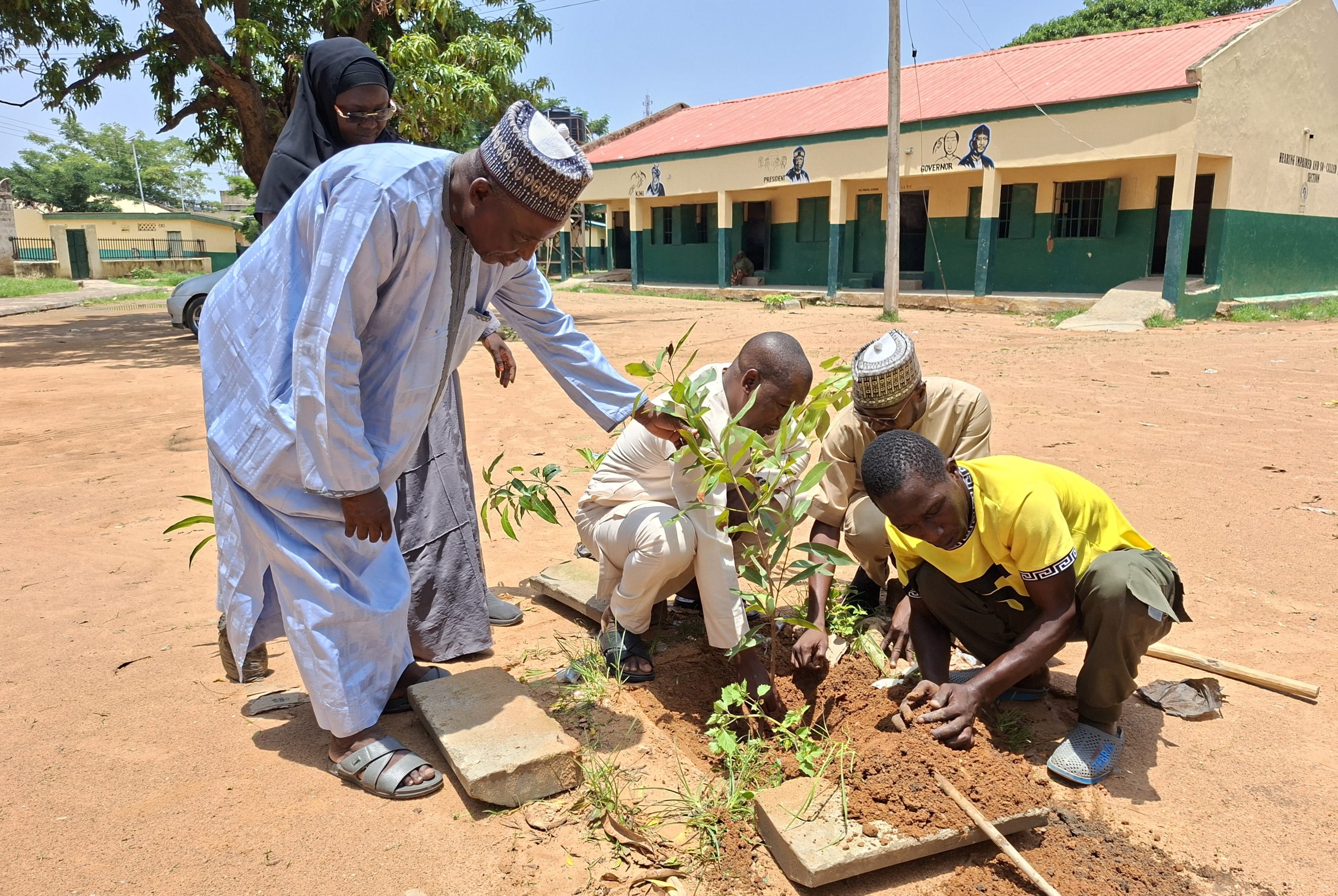
It is against this backdrop that the Centre for Information Technology and Development (CITAD) has launched a school-based tree-planting initiative to restore Kano’s green cover, revive indigenous and threatened traditional tree species and strengthen biodiversity conservation.

The initiative, launched at the Special Education School, Tudun Maliki, Kano, is also aimed at combating desertification, strengthening communities’ resilience to climate change and promoting environmental education among young people.

The first phase covers eight public secondary schools, with plans to extend the programme to more schools. More than 750 seedlings have so far been planted with support from the Kano State Ministry of Water Resources, Environment and Climate Change.
For Kano, where expanding built-up areas are steadily replacing green spaces, the initiative comes at a time when the need to preserve trees has become increasingly urgent.
Trees are not merely decorative features in an urban environment. They provide shade, absorb carbon dioxide, reduce surface temperatures, control erosion and provide habitats for birds, insects and other wildlife.
But as the city expands, many mature and traditional tree species that once formed an important part of Kano’s landscape are disappearing.
Environmental advocates say the challenge therefore goes beyond planting large numbers of seedlings. It requires the deliberate restoration and protection of indigenous species that are naturally adapted to the local environment and contribute to the survival of other forms of life.
Studies of land-use changes in Kano between 1986 and 2016 have shown a decline in vegetation-covered areas as built-up land expanded, raising questions about the city’s ability to regulate temperatures, absorb rainwater and maintain a healthy urban ecosystem.
The Kano State Government has also introduced tree-planting measures to reverse the trend. In 2025, it distributed 5.5 million seedlings across the state’s 44 Local Government Areas, targeting schools, communities and roadsides.
The programme was expanded in 2026, with a target of planting 10 million trees as part of a broader ambition to plant 20 million trees by 2030.
However, environmental advocates argue that the success of such programmes should not be judged by the number of seedlings planted alone. Their survival, growth and contribution to the restoration of ecosystems are equally important.
This is where CITAD’s school-based approach could play a significant role.
The organisation has placed particular emphasis on indigenous trees, recognising that restoring Kano’s green cover requires more than simply increasing the number of trees. It also involves preserving species that are suited to the region and restoring the ecological functions of traditional vegetation.

Teachers from participating schools have received training on the cultivation and care of indigenous trees, while the Kano State Senior Secondary Schools Management Board provided nursery space for the seedlings.
At the Special Education School, 10 students were selected as tree-protection prefects to monitor and protect the newly planted trees.
The arrangement underscores an important principle of environmental restoration: planting is only the beginning.
A seedling must survive drought, extreme heat, inadequate watering, livestock and human interference before it can mature and provide significant environmental benefits.
The involvement of students and teachers could therefore become one of the most valuable aspects of the initiative. By making young people custodians of the trees, schools can become practical centres for environmental education and biodiversity conservation.
Environmental clubs, tree registers, watering schedules and regular survival monitoring could further strengthen the programme and encourage students to take ownership of the trees planted within their schools.
The Kano State Government’s 2026 tree-planting campaign, which includes quarterly survival audits, also offers an important model for shifting attention from planting figures to long-term survival and environmental impact.
But new planting alone will not address Kano’s environmental challenges.
Conservationists say protecting existing mature trees must remain an equally important priority.
A mature indigenous tree that has taken decades to grow cannot be replaced immediately by a newly planted seedling. Once removed, its ecological functions, shade and biodiversity value may take many years to recover.
This makes the protection of Kano’s remaining mature trees, parks, school grounds, road verges and other green spaces just as important as planting new ones.
Environmental protection must therefore become an integral part of urban planning rather than an afterthought to development.
As Kano continues to expand, authorities and developers need to take trees and green spaces into consideration when planning roads, housing estates, markets, schools and other infrastructure.
The revival of indigenous trees could also help preserve part of Kano’s environmental heritage.
Traditional tree species have historically provided shade, food, shelter and other benefits to communities while supporting birds, insects and other wildlife. Protecting them can therefore contribute simultaneously to climate resilience, environmental sustainability and biodiversity conservation.
The responsibility for restoring Kano’s green cover, however, cannot rest solely on government or organisations such as CITAD.
Communities, schools, traditional and religious institutions, businesses and individual residents all have roles to play.
Communities can discourage indiscriminate tree felling and protect existing vegetation. Schools can establish environmental clubs and involve students in tree care. Businesses can incorporate trees and green spaces into their premises, while local authorities can strengthen enforcement of environmental regulations.
Urban developers should also be encouraged to preserve mature trees and provide adequate green spaces in new developments.
Kano’s shrinking green cover does not have to be an unavoidable consequence of urban growth.
With sustained planning, effective enforcement, community participation and a deliberate commitment to indigenous tree restoration, the city can pursue development while protecting its natural environment.
CITAD’s initiative demonstrates how schools can become important centres for environmental education, biodiversity conservation and practical climate action.
Its long-term success, however, will depend on what happens after the planting exercises — whether the seedlings survive, whether indigenous species are protected and whether communities develop a lasting culture of caring for trees.
For Kano, restoring green cover must mean more than planting trees. It must involve protecting the trees that remain, reviving threatened indigenous species and preserving the biodiversity that provides ecological resilience to the city and its surrounding communities.
In a rapidly urbanising city facing rising temperatures and environmental degradation, maintaining and expanding green cover is no longer simply an environmental concern. It is essential to keeping Kano liveable for present and future generations.
