
Report by Amina Khalid Muhammad
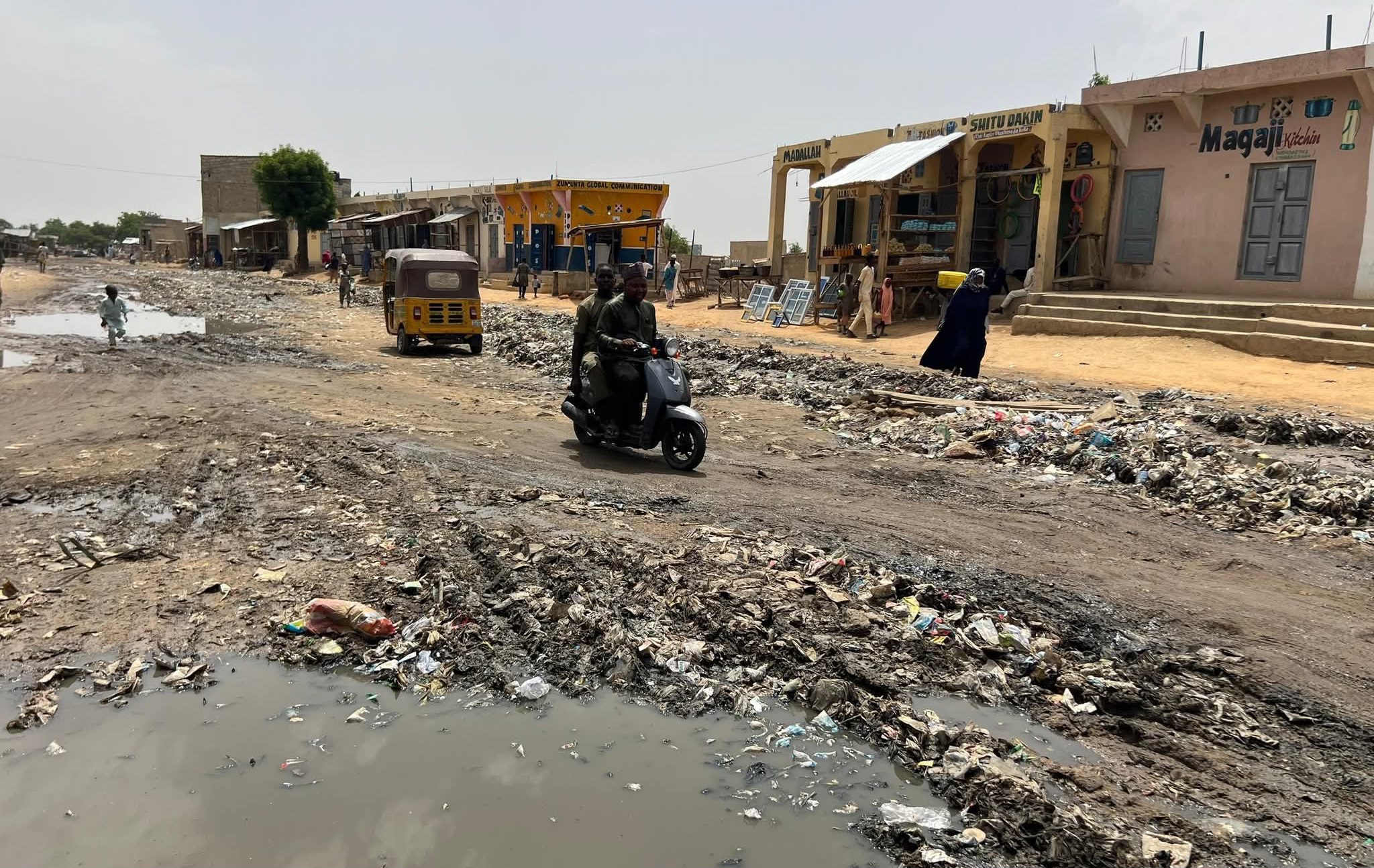
Every rainy season, residents of Wuro Bagga, Haye, and Sauna communities in Nassarawa Local Government Area of Kano State brace themselves for a familiar ordeal. After every heavy downpour, roads become impassable, homes are inundated, and families are left counting losses that many say could have been prevented.

While climate change and increasing rainfall have contributed to urban flooding across northern Nigeria, findings by CITAD Online Radio reveal that poor waste disposal and blocked drainage channels have become major drivers of recurring floods in these vulnerable communities.
Residents, community leaders, environmental experts, and government officials say indiscriminate dumping of refuse into waterways, coupled with inadequate drainage infrastructure and weak waste management systems, has turned seasonal rainfall into an annual disaster.

For many residents, flooding has become part of daily life during the rainy season.
Standing beside a drainage channel clogged with plastic waste and household refuse in Wuro Bagga, Malam Musa Abdullahi, a resident, said every rainfall brings anxiety.
“We don’t sleep peacefully whenever it rains. Once there is heavy rainfall, water enters our compound because the drainage is blocked. We lose food items, mattresses, and other household property almost every year,” he said.
Another resident of Sauna community, Hajiya Aisha Ibrahim, said residents have repeatedly appealed for government intervention.
“We clean the drains around our houses, but the problem goes beyond individual efforts. There is no proper waste collection system here, and many people dump refuse into the gutters because they have nowhere else to dispose of it,” she said.

She added that children often miss school after floods because roads become inaccessible.

The Federation of Community Organisations (FOCO) has consistently identified Wuro Bagga, Haye, and Sauna among the communities most vulnerable to flooding and erosion in Kano State.
According to Ibrahim Gama, Coordinator of FOCO, the recurring floods are largely the result of poor urban planning and environmental neglect.
“The flooding affecting these communities is not caused by rainfall alone. We have inadequate drainage infrastructure, poor physical planning, indiscriminate waste disposal, limited waste collection services, and low public awareness of environmental sanitation,” Mr Gama said.

He explained that blocked drainage channels prevent stormwater from flowing naturally, forcing floodwater into homes and streets.
“Even where drains exist, many become filled with plastics, sachet water wrappers, and domestic refuse. Water then has nowhere to go except into people’s houses,” he added.
The Kano State Government has undertaken drainage reconstruction in parts of the metropolis, including around Babangwari Roundabout and the Rimin Kebe-Gayawa corridor.

The government also inaugurated the 2026 Flood Emergency Operations and Response Strategic Team to strengthen flood preparedness across the state.

However, residents and civil society organisations argue that many semi-urban settlements in Nassarawa LGA remain underserved despite being recognised as flood-prone communities.
Environmental expert Bashir Bello of the Kano Green Environment Initiative said infrastructure development has not kept pace with rapid urban expansion.
“Drainage systems constructed several years ago were not designed for today’s population density and changing rainfall patterns. Unless drainage expansion is matched with proper waste management, flooding will continue,” he said.
Available research on solid waste management in Kano metropolis shows that the city generates hundreds of tonnes of municipal waste daily, while only a fraction is processed through formal waste management systems.
Environmental studies also indicate that many households rely on informal waste disposal methods because of inadequate refuse collection services and limited access to designated dumping sites.
As a result, drainage channels frequently become dumping grounds for plastic waste and household refuse.
Officials of the Kano State Refuse Management and Sanitation Board (REMASAB) have intensified waste evacuation exercises across parts of Kano metropolis and introduced measures aimed at improving sanitation services.

A senior REMASAB official, who was not authorised to speak officially, said public cooperation remains essential.
“Government cannot solve the problem alone. Residents must stop dumping refuse into drains because those same drains are meant to carry floodwater during the rainy season,” the official said.
The impact of flooding extends far beyond damaged buildings.
During visits to the affected communities, residents reported losing household belongings, food supplies, clothing, and important documents after repeated flooding.
Floodwaters also disrupt access to schools and healthcare facilities, while stagnant water increases the risk of waterborne diseases, particularly among children.
Environmental health specialist Dr Fatima Sani warned that blocked drainage systems create conditions for disease outbreaks.
“Floodwater contaminated with refuse exposes communities to diseases such as cholera, typhoid, and diarrhoea. Effective waste management is therefore both an environmental and a public health issue,” she said.
Environmental experts say addressing flooding in Nassarawa requires coordinated action involving the Kano State Government, Nassarawa Local Government Council, waste management agencies, and residents.
According to them, expanding drainage infrastructure without improving waste disposal practices will produce only temporary results.

They recommend sustained community-based sanitation campaigns, regular waste collection, enforcement of environmental sanitation regulations, and investment in drainage construction and maintenance in underserved communities.
For residents like Malam Musa Abdullahi, the solution is straightforward.
“We are not asking for miracles. We only want functioning drainage, regular refuse collection, and government attention before the next flood comes,” he said.
As Kano prepares for future rainy seasons, the experience of Wuro Bagga, Haye, and Sauna illustrates how failures in environmental management continue to expose vulnerable communities to avoidable disasters.
This special report was produced by CITAD Online Radio as part of its ongoing coverage of environmental governance, climate resilience, and community development issues affecting underserved communities in Kano State.