
Amina Khalid
Experts have warned that the adoption of artificial intelligence (AI) in Nigerian universities is advancing faster than institutional policies to regulate its use.
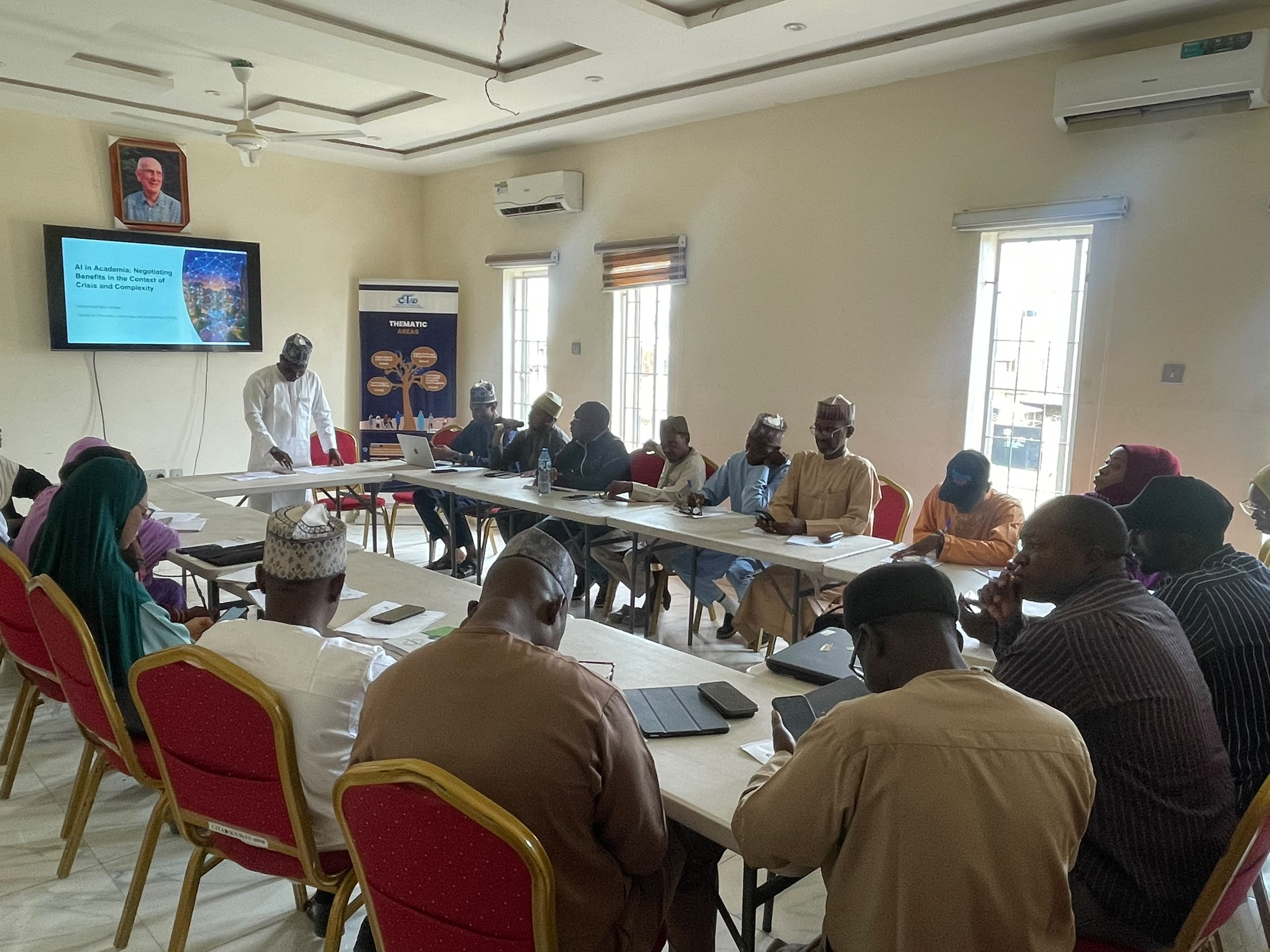
The experts spoke on Thursday at the sixth Digital Tech Policy Forum organised by the Centre for Information Technology and Development (CITAD) in Kano.
The forum, held at the Bjorn Beckman Hall, was themed: “AI in Academia: Negotiating Benefits in the Context of Crisis and Complexity.”
It brought together academics, researchers and students to examine the opportunities and risks associated with the growing use of AI in teaching, research and university administration.
Speaking during the forum, Sana Abdullahi Mu’az, one of the lead presenters, said AI had become an integral part of daily life and was rapidly transforming the education sector.
She said the technology was creating a significant gap between students, who could use AI tools to generate academic content within seconds, and lecturers, who spent considerable time developing students’ critical thinking through conventional teaching methods.
Ms Mu’az warned that the use of AI posed serious challenges to academic integrity, including plagiarism, fabricated references and the submission of work that did not reflect students’ independent thinking.
She also raised concerns about AI-generated misinformation, bias and the technology’s inability to adequately understand some Nigerian languages.
According to her, the country’s digital divide, unreliable electricity, limited internet access and low device ownership could further deepen inequality in access to AI-powered learning tools.
“AI will not replace education, but it will redefine it,” she said, stressing that the technology must be guided by human judgement and ethical responsibility.
Another presentation at the forum examined the use of AI in university research, administration and student support.
The presenter highlighted potential applications in automated grading, translation services for students with disabilities, literature reviews, climate modelling and admissions support.
However, he warned that the technology also raised concerns about academic integrity, data privacy and institutional accountability.
He urged universities to adopt a human-centred approach to AI based on AI literacy, equitable access, human-centred learning, ethical accountability and clear institutional governance.
Lecturers raise concerns over AI-generated assignments
During the interactive session, lecturers recounted instances of students submitting AI-generated assignments despite being instructed to write their work manually.
Some lecturers also reported discovering fabricated citations and references generated by AI systems.
Participants further raised concerns about bias in AI-generated text and images, as well as the inability of many AI tools to accurately process Nigerian languages, including Hausa.
Some speakers called for the development of locally built AI systems trained on African languages, data and contexts.
They cited Aboki AI, a Nigerian-developed agricultural technology tool, as an example of efforts to develop AI solutions that respond to local needs.
Participants were divided on whether AI could serve as an external examiner. While some argued that it could reduce human bias in grading, others said examination required ethical judgement and human understanding that AI could not yet replicate.
Experts call for institutional AI policies
At the end of the forum, participants called on Nigerian universities to develop formal policies regulating the use of AI by students, lecturers and researchers.
They also recommended the establishment of dedicated AI training laboratories and increased investment in electricity, internet connectivity and digital devices to expand access to AI-based learning.
The participants urged researchers to develop Nigerian and African datasets rather than relying solely on generic global AI models.
They also called on lecturers to redesign assessments to test students’ critical thinking and understanding rather than tasks that could easily be completed using a single AI prompt.
The participants further recommended the expansion of AI literacy campaigns to secondary schools and increased attention to AI tools that support students with disabilities.
CITAD said it would consider organising a follow-up session and compile the recommendations from the forum into a working document ahead of its next policy dialogue.
The participants agreed that the debate had moved beyond whether Nigerian universities should adopt AI to how the technology could be adopted responsibly.