
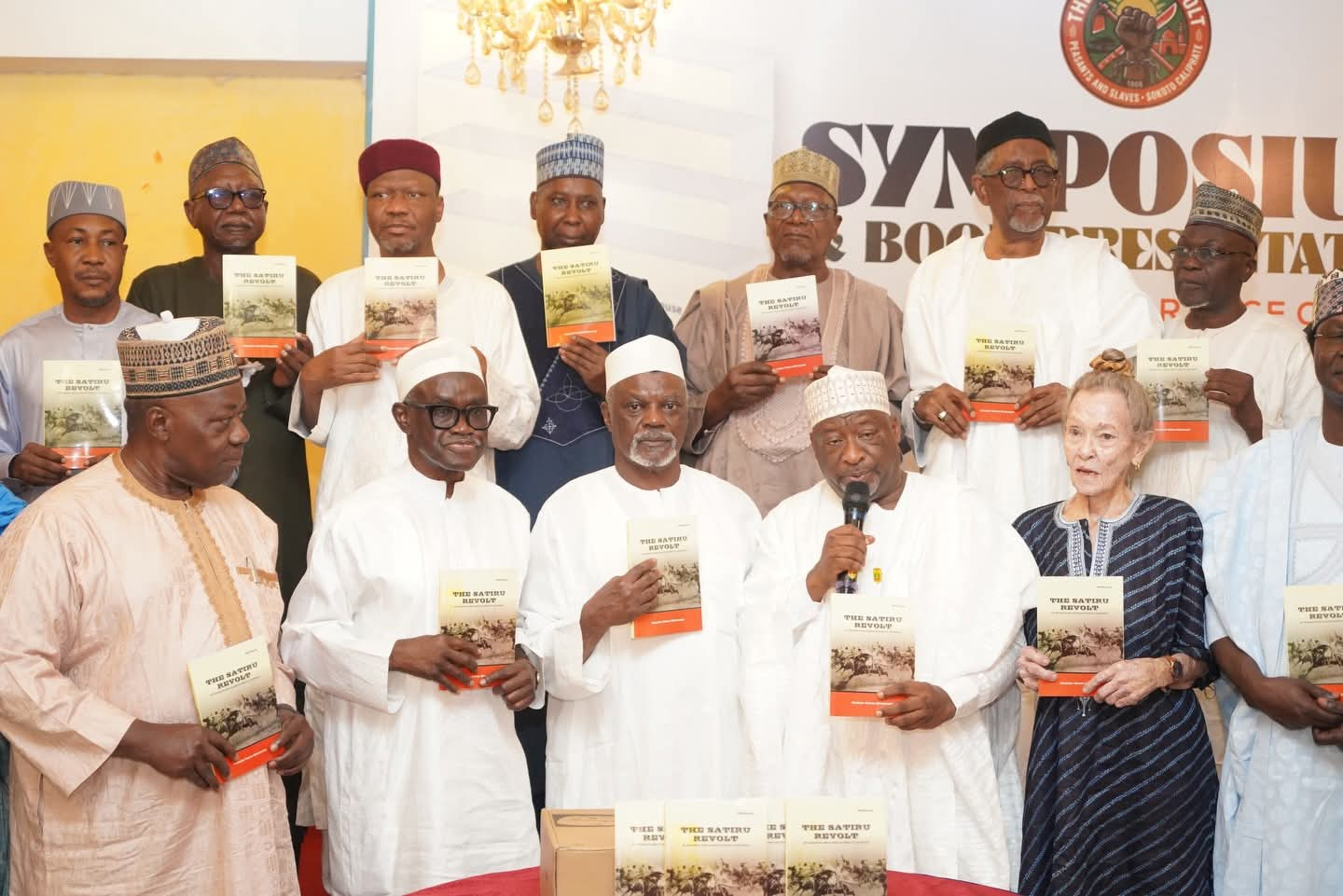
Intellectuals, scholars, labour leaders, and associates have paid tribute to the late Comrade Abubakar Sokoto Mohammed, describing him as a man of integrity, intellectual depth, and commitment to national unity and development.
The tributes were made on Wednesday in Abuja at a symposium and posthumous book presentation held in his honour. The event drew policy experts, former public officials, labour leaders, and members of the National Institute community, who reflected on his contributions to academia, public service, and labour activism.
Chairman of the organising committee, Jibrin Ibrahim, said Mohammed’s life had a wide impact and that his death came as a shock to many.
“I welcome you on behalf of the organising committee of this symposium commemorating the legacies of a good friend, Comrade Abubakar Sokoto Mohammed, whose life has positively impacted the lives of many. It was such a shock when we heard about his passing. We are all on line to pass on whenever our time comes, but we must celebrate those who lived meaningful lives,” he said.
President of the Alumni Association of the National Institute, Okafor, described the deceased as a man of rare character.
“Mallam Sokoto was a man of integrity. He was humble, forthright, very honest, and peaceful. When we were at NIPSS, he stood out among his peers. Even when several people contested for leadership positions, he was unanimously chosen because of his character,” he said.
He added: “I told his son earlier that your father may not have accumulated wealth, but he left behind something more enduring—integrity. That is the true measure of a man. We will continue to support his family and ensure they are not left alone.”
Director of Research at the National Institute for Policy and Strategic Studies (NIPSS), Musa Umar, said Mohammed was widely respected for his discipline and professionalism.
“Mallam Sokoto, to us at the National Institute, was a man of integrity. His yes was yes, and his no was no. He served in virtually all departments because of his credibility. There is hardly any aspect of the institute’s work he did not contribute to, and he was respected by all,” he said.
He added that Mohammed also mentored younger colleagues who later assumed strategic roles in both the public and private sectors.
Former Nigeria Labour Congress President Ayuba Wabba described him as a key figure in labour intellectual development.
“He was a comrade to the core—not just in name, but in action. He helped to build intellectual capacity within the labour movement and contributed immensely to the growth of the Medical and Health Workers’ Union. His impact is still being felt today,” Wabba said.
Chairman of the occasion, Yahaya Abdullahi, said Mohammed was a close friend and confidant.
“He was my childhood friend, my colleague, and my roommate. We shared everything together. Sokoto was highly principled, selfless, and deeply committed to whatever he set out to achieve. There is no one who would not want him by their side,” he said.
He added that the gathering was intended to celebrate the deceased’s life and ideals.
The event also featured the posthumous presentation of Mohammed’s book, The Satiru Revolt, reviewed by M. J. Kuna, who described it as a significant academic work offering new interpretations of historical and socio-political narratives.
Participants prayed for the repose of the deceased and called on younger generations to uphold his values of integrity, patriotism, and intellectual excellence.