
Salim Sani Shehu
DAMATURU, YOBE STATE, NIGERIA — The essential digital lifeline for thousands of internally displaced persons (IDPs) across Yobe State is being systematically cut by a federal mandate requiring all mobile SIM cards to be linked to the National Identity Number (NIN).
The policy, which the government touts as a boost to national security and financial inclusion, has instead plunged conflict survivors into a profound digital blackout. This mass disconnection is severing their access to critical humanitarian cash assistance, timely security alerts, and vital communication with separated family members.
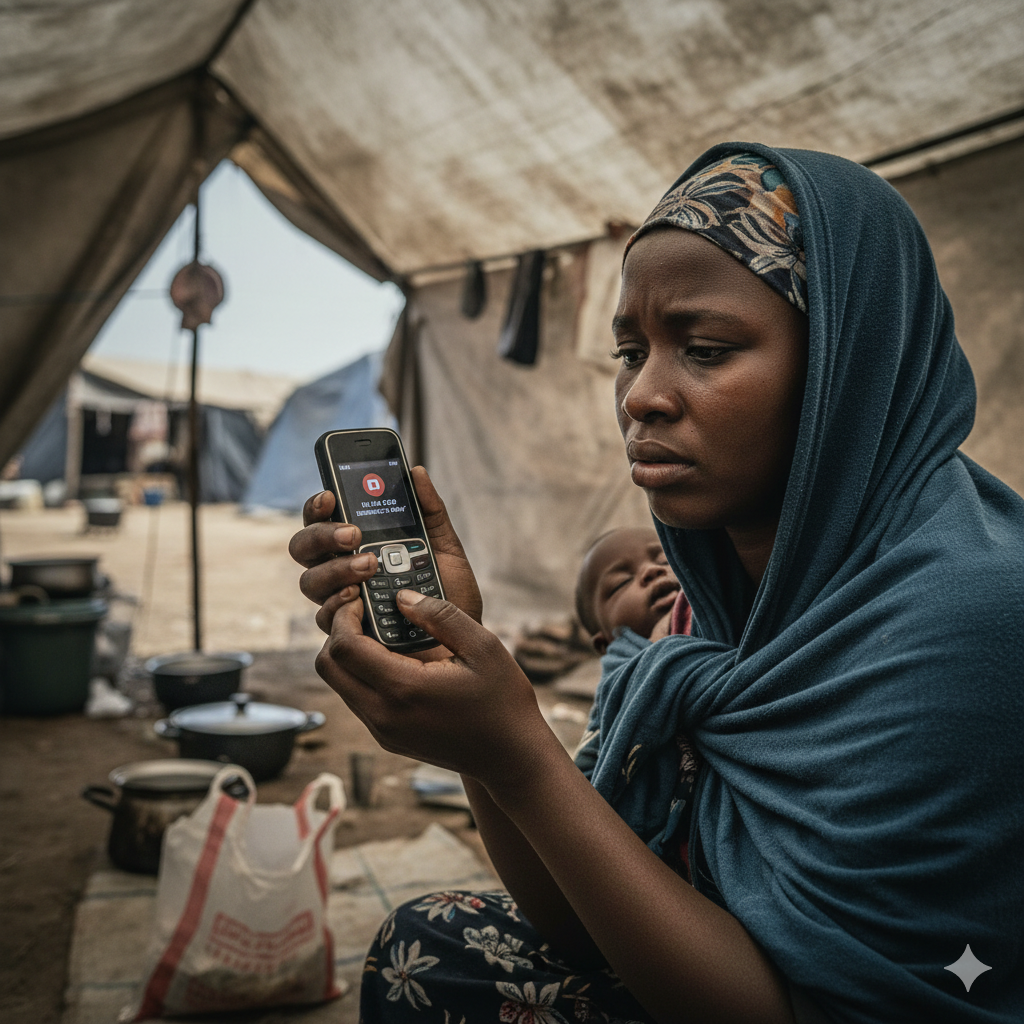
In the makeshift shelters of the Damaturu IDP camp near Damaturu, Fatima Jalla stares at a silent phone. The device once reliably buzzed every Monday with cash alerts needed for soap and rice. “Now it’s just quiet,” she says. Like countless displaced mothers, her SIM card was disconnected because she lacks the official NIN, effectively isolating her from external aid and news.
Editorial judgment frames this as a crisis of exclusion, exposing a deep disconnect between national bureaucracy and the harsh humanitarian reality on the ground in Nigeria’s volatile North-East.
Policy Success Masks Exclusion CrisisNigeria’s telecom regulator claims a resounding success, citing 153 million SIMs linked to NINs, which represents 96% compliance nationwide. However, that blanket metric masks a severe humanitarian crisis among the estimated two million IDPs across the region, many of whom fled violence with no documents.
For these most vulnerable citizens in Yobe’s camps and host communities, the NIN has often proven unattainable:
Financial Exclusion
Malam Yagana, a 26-year-old displaced from Gulani, had his NIN slip destroyed when his home burned down. Without a linked SIM, his mobile banking app is frozen, forcing him to risk carrying large amounts of cash in insecure market environments.
Loss of Contact
Falmata, a 20-year-old in a camp near Gujba, lost her ability to call her brother and check on her mother miles away. “I feel cut off,” she stated, emphasizing the loss of a basic right to communication.
Inaccessibility
Telecommunications agents reportedly deem many conflict-affected areas “blackspots” due to security risks, making official enrollment outreach rare and severely inadequate.
Musa, a registration officer in Damaturu, admitted to facing severe risks: “We risk ambush if we go there.” This fear translates directly into women, the elderly, and the displaced being permanently left off-grid.
The consequences are direct and severe: Several humanitarian NGOs report a proliferation of “ghost beneficiaries”— qualified individuals who cannot receive cash grants because their phone numbers are unverified.
“I had to wean my baby too early, because our cash transfer stopped suddenly,” one displaced mother recounted to an NGO worker. “I could call no one to help us.”
Calls for Policy Reversal and Humanitarian ExemptionsThe SIM-NIN policy, first announced in 2020, has been marked by a cycle of repeated deadlines and bureaucratic missteps. The National Identity Management Commission (NIMC) ultimately failed to establish functional and safe registration mechanisms within the active conflict and displacement zones of Yobe State.
Digital rights advocates warn the rigid policy is creating an unprecedented layer of exclusion, violating the very human rights it ostensibly aims to protect.
Dele Adeleke, a digital rights advocate, stated that imposing “static IDs in a fluid crisis” is fundamentally flawed. In a joint statement, Paradigm Initiative and other human rights organizations condemned the mass disconnections as a “threat to human rights,” noting that millions, especially women and children in conflict zones, lacked any formal ID even before the mandate.
Chinyere Okonkwo, a former telecom regulator, conceded that while compliance has been high overall, “no plan was made for war zones” during the initial rollout design. The activist groups are now urging the government to immediately reverse the disconnection directive and institute clear humanitarian exemptions.
Urgent Recommendations to End the Digital SilenceExperts and aid workers insist that a digital identity policy cannot be built at the expense of those fleeing violence. They have converged on a series of urgent recommendations to prevent further humanitarian catastrophe in Yobe:
“Connectivity shouldn’t be a luxury or a privilege especially not for people fleeing violence,” said IT expert Rabi’u Haruna. To prevent Yobe’s survivors from falling deeper into silence, policymakers must urgently humanize the digital mandate they created.