
Report by Buhari Abba & Salim Sani Shehu
The exodus of medical personnel from Nigeria to other countries is a growing crisis, especially for a nation with a population exceeding 200 million. With less than half of its registered doctors practicing in the country, and the majority seeking better opportunities abroad, the healthcare system is in dire straits. Aggravating the situation is the lack of significant investment in healthcare infrastructure. Those worst affected are in rural areas, where residents often travel long distances for basic healthcare, with the burden falling heavily on women and children.
Nigeria accounts for the second-highest number of maternal and child deaths globally, contributing 12% of the world’s total. According to the UNICEF Global Maternal Mortality Report, about 82,000 Nigerian women die every year due to pregnancy or childbirth complications. The dilapidated rural healthcare facilities, such as those in Marabar Liman Katagum in Bauchi State, contribute significantly to this national crisis.
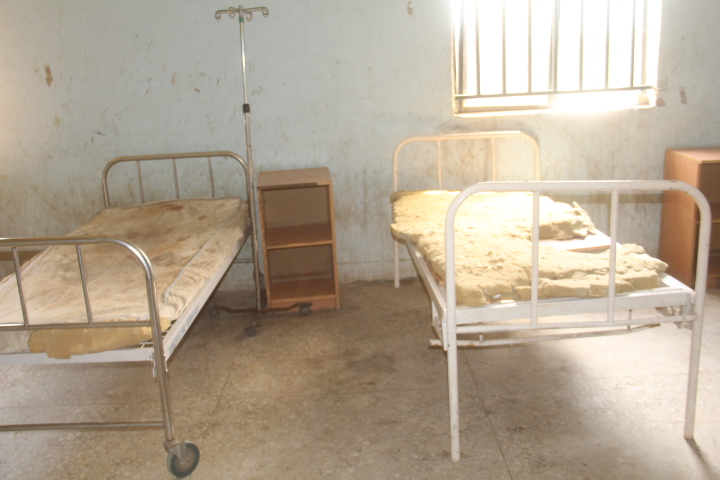
In Marabar Liman Katagum, a community in Bauchi State, the primary healthcare center built in 2015 is staffed by just three community health extension workers. The absence of doctors or nurses means the facility is unequipped to admit patients, offering only four beds. Yet, women from surrounding villages, including Unguwar Sarki, Buluko, Dunkoshi, and Zir, rely on this center for antenatal care and immunizations.
Stepping inside the so-called “healthcare center” reveals the extent of the community’s helplessness. Broken metal bed frames, with one holding a single rickety mattress, constitute the facility’s “bed capacity.”
The maternity section of the primary healthcare center is a dilapidated structure. During the rainy season, it is unusable due to leaking roofs.
Despite the center’s critical role, women have expressed concerns over the unavailability of essential medicines. Basic services such as family planning and laboratory tests are absent, forcing them to travel over one hour to Gwallameji, a town near Bauchi, for healthcare and to purchase drugs. In emergencies, traditional birth attendants assist pregnant women at home. If complications arise, women must endure perilous journeys by motorcycle or tricycle to Gwallameji.
Muhammadu Jamilu, a resident, highlighted the distressing state of the health center. “The lack of doctors or nurses and the non-functional maternity section worry our community members,” he said. “The only service we get here is immunization for children. Women often have to deliver babies themselves, especially at night.”
Hajara Abdullahi, a 45-year-old resident of Unguwar Sarki, pregnant with her first child, expressed frustration over the limited care available. “I don’t go to the hospital often, only when I got pregnant and needed antenatal care. Most women in the village rarely go,” Abdullahi said. “In emergencies at night, we have to go to Gwallameji because the health workers leave by 2 pm. They don’t give us advice or tell us what foods to eat. They only touch our stomachs and prescribe drugs that they don’t even have.”
Tragically, the lack of proper medical care has led to preventable deaths. Khadija Usman, who lost her sister in 2023 after childbirth, recounted the harrowing experience. Her sister suffered from postpartum hemorrhage but couldn’t reach the nearest hospital in time. “She tried to give birth at home, but the traditional birth attendant couldn’t manage the situation. The death could have been avoided if proper maternal care had been available,” Usman said.
The financial burden of accessing healthcare is another challenge. Halima Adamu, a resident of Mararani, explained that most locals cannot afford the cost of hiring a motorcycle to reach the Marabar Liman Katagum health center, about 55 kilometers away. “Hiring a motorcycle costs over ₦2000 each way. We are a poor community, and many cannot afford these expenses, so we take the risk of delivering at home, despite the dangers,” Adamu said.
A health worker at the Liman Katagum Primary Healthcare Center, who spoke on the condition of anonymity, lamented the shortage of staff and the lack of necessary equipment to make the facility function efficiently. “The center has only three permanent workers catering to an estimated 3,000 people in the community,” he said. “The other health worker is a volunteer, focusing on immunizations.”
“The lack of resources is crippling,” he continued. “We resort to measuring pregnancies with tape as there are no scanning machines here. We’re limited to basic tests, and forget about proper checkups; the facilities simply aren’t there.”
Even basic care comes with challenges. “If a treatable case arrives, we often have to travel to Bauchi ourselves to buy medication. Ideally, we refer patients, especially pregnant women, to the General Hospital in Bauchi to avoid complications.”
The problem of Marabar Liman Katagum comes after Bauchi State allocated ₦45,092,577,014.61 in its 2024 budget, which covered 15.02% of the health budget, focusing on critical health interventions and infrastructure.
The budget was allocated to the state’s Ministry of Health, Primary Healthcare Development Agency, Hospital Management Board, Aliko Dangote College of Nursing and Midwifery, Bill and Melinda Gates College of Health Technology, Drugs Management and Medical Consumables Agency (DMMA), Specialist Hospital Bauchi, and the Bauchi State Agency for the Control of HIV/AIDS and Tuberculosis.
Speaking on the matter, Executive Chairman of the Bauchi State Primary Healthcare Board, Dr. Rilwanu Mohammed, noted, “Governor Bala Mohammed is deeply committed to improving the health and well-being of the people. The health sector is one of his administration’s top priorities, and we will continue to invest in upgrading healthcare infrastructure across the state.” Dr. Mohammed added, “Healthcare is a fundamental right. No community, especially one as vulnerable as Marabar Liman Katagum, should be left behind.”