
Report by Ali Sabo & Buhari Abba & Salim Sani Shehu
Camera: Salim Sani Shehu
Jigawa State Governor Malam Umar Namadi has laid out a 12-point agenda focusing on education, healthcare, agriculture, infrastructure, and job creation. He pledged that infrastructure development will be a cornerstone of his administration’s efforts, with accelerated plans to improve road networks, rural electrification, and water resources to create a more business-friendly environment.

However, the reality for Daliya, a small rural settlement in Gwaram Local Government Area, paints a different picture. Lack of basic infrastructure, including roads, schools, and healthcare facilities, has left residents struggling with poverty and isolation.


The water source of Daliya Community
Villagers trek long distances to fetch water from a contaminated stream due to the absence of pipe-borne water, while children are forced to walk to neighboring towns to attend school. Healthcare is another major concern, as residents often lose their lives due to the inability to reach hospitals on time.

Muhammadu Sani Rabi’u, the village head of Daliya, lives in a mud house with a thatched roof and straw fence, typical of many households in the village. He laments the government’s neglect of rural communities, emphasizing that their complaints have been consistently ignored.

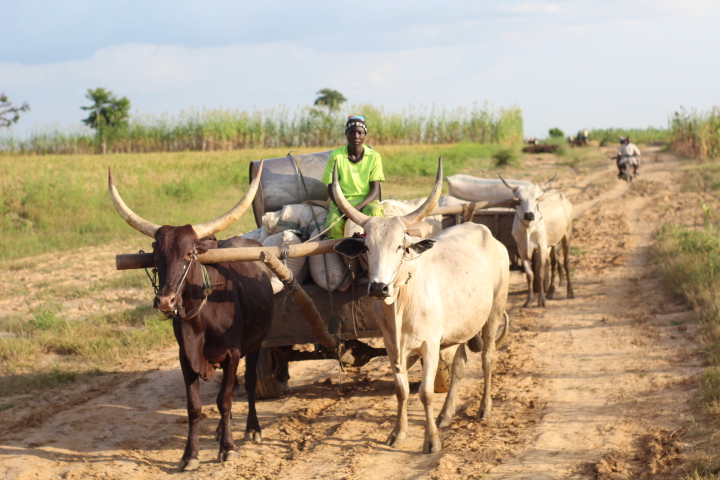
“In the rainy season, the road through Daliya is only suitable for bullock carts,” Rabi’u said. “They are our only means of transporting farm produce, the sick, and pregnant women to Sara Primary Health Care Centre, which is 15 kilometers away. Despite our repeated pleas, the government has refused to build a road or a primary school in this town.”
Rabi’u appealed to both the local and state governments to intervene, saying, “We are urging Gwaram Local Government and the Jigawa State Government to build roads, a primary school, and healthcare facilities for the benefit of our people.”
Malam Muktari Musa, chief imam of the Daliya community, echoed these concerns, highlighting the difficulties faced by the community when trying to access essential services. “We are facing serious issues with bad roads. A bike ride to Sara costs ₦3,000. Our children are not going to school, and pregnant women die on their way to the hospital due to the poor road network,” he explained.

He added that the problem worsens during the dry season when water scarcity becomes more severe. “People rely on a nearby stream, which is often contaminated by waste from cattle. The water is untreated, but we have no other option.”
Muktari called for urgent government intervention, advocating for policies that target rural development and alleviate poverty. “We rarely see government officials to address our requests and grievances. The only time we see them is during elections, when they make empty promises.”
Mukhtar Muhammad, a youth leader in the village, warned that continued neglect could lead to a withdrawal of support from the community. “We cannot continue like this, hearing about the government only on the radio. If things don’t change, we may be forced to withhold our votes in future elections.”

According to Muhammad, the community has significant agricultural potential, but the poor road network has caused most of their produce to perish. “We want the governor to construct good roads to help us transport our farm produce to the markets in the urban centers.”
Shaya’u Musa, another resident, said there were over 500 households in Daliya, all eager for development. “We lack roads, schools, and healthcare. Our people are law-abiding, but we need the government’s support.”

Shaya’u shared a personal tragedy, recounting how he lost both his parents due to the poor road network. “I lost my mother and father on separate occasions while trying to get them to the hospital in Sara. The road is terrible,” he said.
The agricultural sector, the backbone of the community’s economy, also faces significant challenges. Mohammed Bara’u, a 40-year-old subsistence farmer, said that most people grow rice, guinea corn, beans, and vegetables in the Fadama areas. However, access to markets is difficult due to poor roads, and farmers often sell their produce to middlemen at reduced prices.


Agricultural Products in the Daliya Community
Bara’u emphasized the need for government assistance in the form of loans, fertilizers, and mechanized farming techniques. “We still use traditional farming methods, which result in low yields and wastage. If the government could organize farmers into cooperatives and provide support, our economy would improve, and we could provide the social amenities needed by the people.”

The lack of educational opportunities also affects women and girls in the community. Bara’u highlighted the poor state of girl-child education in Daliya, where most women are housewives with limited prospects due to a lack of education. This situation, he explained, reduces family income and puts girls at risk of exploitation.

Healthcare is another area where residents feel neglected. Bara’u noted that patients, including women in labor, often face long, dangerous journeys to Sara for medical care. “The most disturbing thing is that if there’s a medical emergency, it takes a long time to find a vehicle, and even when you get to the hospital, it takes time to see medical personnel. One of the basic things we need urgently is a good road network and hospital in our village.”
The appealed of Daliya community comes amid the approval of over N222.7 billion for road projects, covering a total length of 738.9 kilometers by Jigawa state governor Malam Umar Namadi
The people of Daliya continue to hope for government intervention, but for now, they remain isolated and underserved, waiting for the promises made during election seasons to be fulfilled.