
Amina Khalid
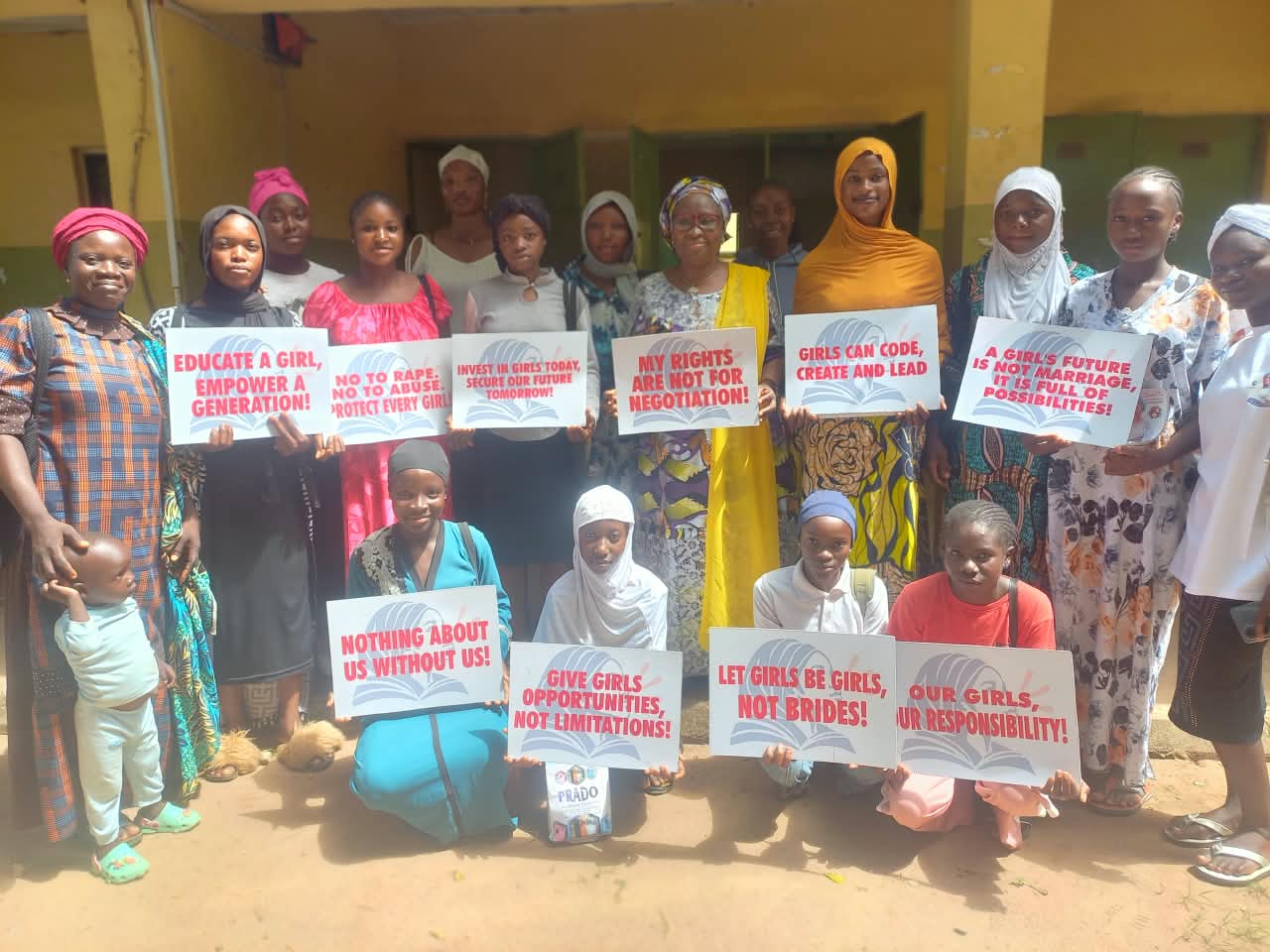
Fourteen adolescent girls from two communities in the Federal Capital Territory have called on education authorities to address early and forced marriage, sexual harassment, poor menstrual hygiene facilities and financial barriers undermining girls’ education.
The girls made the appeal during an advocacy visit to the Universal Basic Education Board (UBEB) in Abuja, facilitated by the Centre for Information Technology and Development (CITAD), with support from ActionAid Nigeria.
The visit, held on Wednesday, November 11, 2026, was led by eight girls from Kilankwa Community in Kwali Area Council and six from Kayache Community in Kuje Area Council.
The girls, who met with UBEB’s Director of Gender, Dr Tamanuwa Safiya, presented findings from community-based research on challenges affecting their education, safety and development.
They identified early and forced marriage as a major factor contributing to school dropout, noting that poverty, financial difficulties and inadequate parental support for girls’ education often forced some adolescents to abandon their studies and marry before completing their education.
The girls also raised concerns over the inability of economically disadvantaged parents to provide essential learning materials, including school uniforms, textbooks and exercise books.
They called for increased scholarships and financial assistance to enable girls from vulnerable households to remain in school.
On menstrual hygiene, the girls said inadequate access to sanitary pads, clean water and appropriate facilities had forced some students to use improvised materials, including rags, while others were compelled to leave classrooms during lessons.
They urged UBEB to improve access to sanitary materials and provide appropriate menstrual hygiene facilities in schools.
The adolescent girls further expressed concern over bullying, sexual harassment and other forms of abuse in schools, including alleged inappropriate conduct by some teachers.
They called for stronger safeguarding measures and effective reporting mechanisms to enable victims to report abuse without fear of intimidation or victimisation.
The girls also warned about the growing risks of human trafficking and exploitation, saying some young girls were lured away from their communities with promises of employment, education and better living conditions.
Responding, Safiya commended CITAD and ActionAid Nigeria for providing a platform for adolescent girls to participate in decisions affecting their education and well-being.
She said tackling early marriage, school dropout and other harmful practices required collective efforts involving government institutions, parents, traditional and religious leaders, schools and civil society organisations.
Safiya encouraged the girls to sustain their advocacy and share the knowledge acquired with their classmates and communities to promote positive behavioural change.
On measures to improve students’ safety, she advised the girls to report cases of bullying, sexual harassment and abuse to guidance and counselling officers, gender desk officers, trusted teachers and school principals.
She stressed the need for functional reporting structures in schools, adding that complaints should be handled with respect for confidentiality.
The UBEB director also disclosed that the board had interventions aimed at improving menstrual hygiene among schoolgirls, including the distribution of sanitary pads through guidance and counselling units and gender desk officers.
According to her, some schools have also been encouraged to establish sanitary pad banks to ensure that girls have access to menstrual hygiene materials when needed.
She added that menstrual hygiene education formed part of school sensitisation programmes, while some schools had benefited from partner-supported training on the production of reusable sanitary pads.
Safiya described the girls as potential change agents and urged them to speak out whenever they observed threats to the rights, education and safety of other girls.
The advocacy visit was organised under CITAD’s Girl-Led Action Project, which seeks to strengthen adolescent girls’ leadership, research, participation and advocacy capacities.
The project enables girls to identify challenges affecting their lives, document their experiences and engage relevant authorities to demand solutions.
Among the recommendations presented during the engagement were increased scholarships for vulnerable girls, stronger campaigns against early and forced marriage, improved access to menstrual hygiene materials and clean water, and regular safeguarding and gender-sensitivity training for teachers.
The girls also called for functional school gender desks and guidance and counselling units to ensure that complaints of abuse and other protection concerns received timely attention.
CITAD said the engagement was part of its efforts, with support from ActionAid Nigeria, to promote girls’ leadership and ensure that adolescent girls had a voice in decisions affecting their education and protection.