
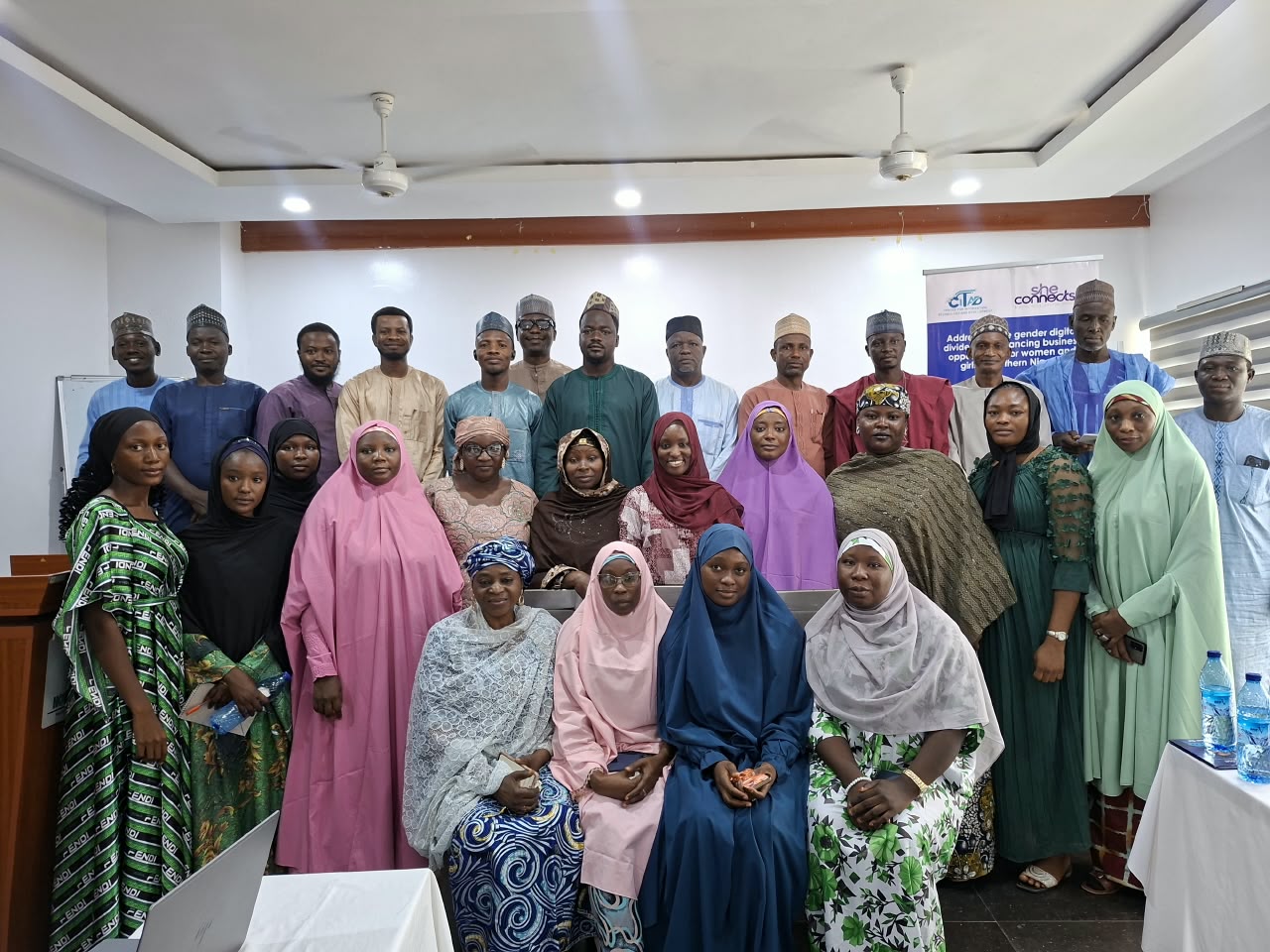
The Centre for Information Technology and Development (CITAD) has sought the support and partnership of stakeholders in Bauchi and Kano states to bridge the gender digital divide and expand business opportunities for women and girls in Northern Nigeria.
Fatima Baba, Programme Manager of the project, made the call while speaking with journalists on Tuesday after a stakeholder engagement in Bauchi.
Baba said the two-year project, titled “Addressing the Gender Digital Divide and Expanding Business Opportunities for Women in Northern Nigeria” (Agenda-WINNIG), which commenced in February 2026, was designed to equip women and girls with digital literacy, digital safety and entrepreneurship skills.
She said the initiative, supported by CARE under the SheConnects Digital Accelerator, was also aimed at promoting access to opportunities in the digital economy.
According to her, the project was informed by the persistent digital divide affecting women and girls, particularly those living in rural communities.
“We want to see how we can address these issues by creating awareness about basic digital skills and how they can stay safe on the internet, after encouraging them to be in the digital space by tapping into the opportunities available,” she said.
Baba said the initiative would also provide entrepreneurship training for beneficiaries interested in using digital platforms to promote and sell their products.
She said the project was targeting 25,000 women and girls across Bauchi and Kano states.
The programme manager explained that 15,000 beneficiaries would receive training in basic digital literacy, digital safety and digital hygiene.
She added that 5,000 final-year secondary school girls preparing for the Joint Admissions and Matriculation Board (JAMB) examination would receive Computer-Based Test (CBT) training.
According to her, another 5,000 women and girls would be trained in digital entrepreneurship.
Baba said the stakeholder engagement was organised to obtain contributions and recommendations from relevant stakeholders towards improving the implementation of the project.
She added that recommendations from stakeholder engagements at the state and federal levels would contribute to a policy brief to be developed at the end of the project.
Also speaking, Mujahid Ibrahim, Head of CITAD’s Bauchi team, said the organisation was implementing the project through partnerships with community-based organisations and other networks to mobilise beneficiaries.
He said the approach was aimed at ensuring that women and girls in hard-to-reach communities were included in the intervention.
“We use the network of community-based organisations and partners in the communities to mobilise participants, and then we go there to conduct the training,” he said.
Ibrahim said stakeholders actively participated in the engagement and provided recommendations that would help improve the implementation of the project.
He said the stakeholders included community leaders, information technology organisations, civil society organisations, traditional and religious leaders, lecturers, government institutions and development partners.
He added that the project had also engaged institutions involved in capacity building and knowledge acquisition.
Meanwhile, Jamila Sule, Deputy Secretary-General of the Network of Nigerian Women Mediators, Bauchi, described the project as timely, particularly given the difficulties many women and girls face in using smartphones and accessing digital opportunities.
Sule said the initiative had the potential to change the mindset of women and girls by exposing them to productive uses of digital technology.