
Amina Khalid
The Kano State Government says it is exploring the circular economy approach to turn waste into economic resources and create employment opportunities.
The Managing Director of the Kano State Refuse Management and Sanitation Board (REMASAB), Dr Muhammad S. Khalil, said the state must move away from the conventional “take, make, use and dump” system.
Khalil said this would require greater emphasis on waste reduction, reuse, recycling, composting and resource recovery.
He said REMASAB was already applying circular economy practices to plastic and organic waste through collection, sorting, processing, recycling and composting.
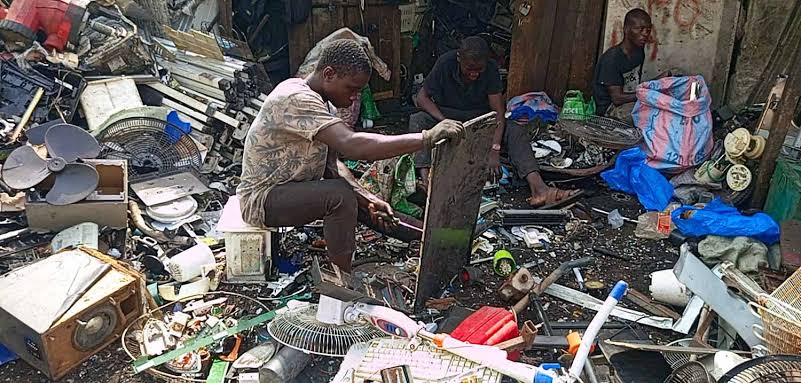
The managing director said the agency was also working toward establishing waste banks, formalising waste pickers and supporting small and medium-sized recycling businesses.
According to him, discarded plastic bottles can be converted into raw materials, while organic waste from homes and markets can be composted and used as fertiliser.
He said metals, paper, glass and other recyclable materials could also be recovered and sold instead of being dumped.
Khalil said the initiative was particularly important given the increasing volume of waste generated in Kano as a result of rapid urbanisation and changing consumption patterns.
He said the state was also planning a 100-hectare Recycling City to accommodate recycling companies, investors and other stakeholders in waste recovery.
According to him, the facility is expected to provide infrastructure for collection, sorting, processing, recycling, composting and manufacturing within an integrated waste recovery system.
He, however, identified poor waste separation at source as one of the major challenges to the development of an effective circular economy in the state.
“When food leftovers, plastics, broken glass, paper and metals are mixed together, recovering valuable materials becomes more difficult and expensive,” he said.
Khalil said waste separation should begin at homes, markets, schools, offices and restaurants to ensure that recyclable materials were recovered efficiently.
He said residents could separate organic waste, plastics, paper and other recyclable materials, while schools and markets could establish waste banks.
The state’s waste-recycling handbook also highlights the need to develop recycling infrastructure, attract private-sector investment, establish waste-processing centres and improve data collection on waste generation and processing.
Khalil said the formalisation of waste pickers was also part of the state’s plan, noting that they could be organised into cooperatives and provided with training, protective equipment, identification systems, access to finance and reliable markets.
He said the measure would help integrate waste pickers into the formal economy and improve their working conditions.
The circular economy, according to stakeholders, could create opportunities for young people, women, artisans, entrepreneurs and investors in waste collection, transportation, sorting, processing, recycling and manufacturing.
The success of the initiative, however, would depend on sustained investment, effective waste collection, reliable sorting and processing systems, access to markets and finance, enforcement of environmental regulations and public participation.
The Kano State Ministry of Water Resources, Environment and Climate Change has also included waste management and the circular economy in its environmental agenda, with emphasis on recycling and composting programmes.
Recent stakeholder discussions in Kano have brought government agencies, producers, recyclers and waste pickers together to discuss resource recovery and the implementation of Extended Producer Responsibility.
The approach requires manufacturers to take greater responsibility for waste generated by their products, particularly packaging materials.
Stakeholders say government, residents, businesses and manufacturers must work together to address the state’s waste management challenges.
They said effective implementation of the circular economy could reduce pollution, prevent blocked drainage channels, create jobs and businesses, improve public health and contribute to a cleaner environment.