
Buhari Abba
The Centre for Information Technology and Development (CITAD) has begun a one-year campaign to plant one million indigenous trees across northern Nigeria, alongside a pilot programme to restore degraded forests.
The campaign, which covers the 19 states of the region, began on Wednesday in Jama’are Local Government Area of Bauchi State and will run from Sept. 2, 2026, to Sept. 1, 2027.
CITAD Executive Director, Y. Z. Ya’u, said the initiative combined large-scale tree planting with efforts to rehabilitate areas that had lost their forest cover.
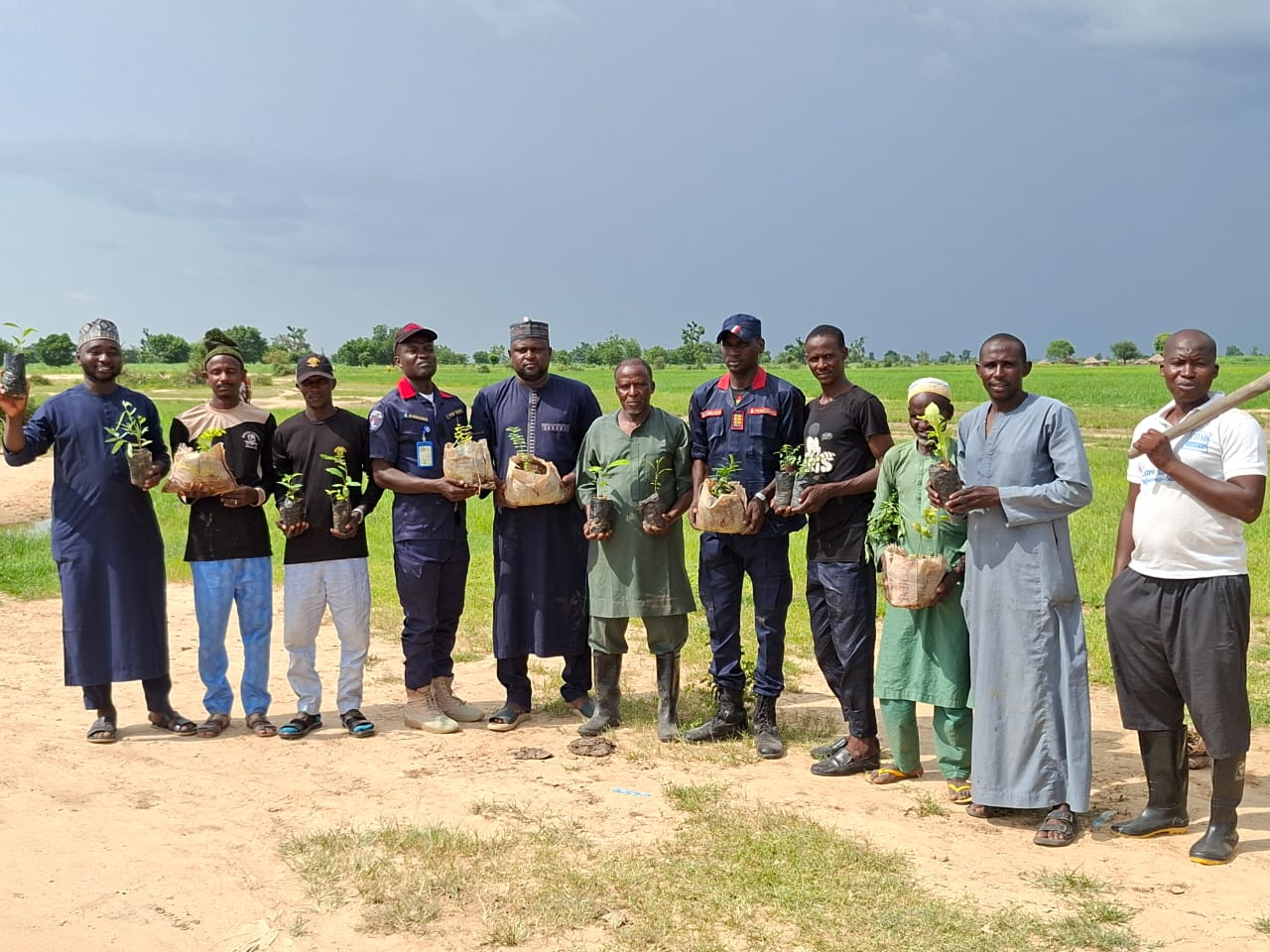
He added that, as part of the pilot restoration programme, CITAD and its partners planted 100 trees in an area of Jama’are that was formerly a forest.
“We are not only interested in planting one million trees and counting them; we also want to see how we can restore areas that have been degraded and lost their forest cover,” Ya’u said.
“That is why, together with our partners, we planted 100 trees in what used to be a forest here in Jama’are as a pilot forest restoration exercise,” he added.
The exercise involved officials of the Nigeria Security and Civil Defence Corps (NSCDC), forest guards and members of host communities.
It covered Kwanar Digiza, Jogayel and the Government Arabic College in Jama’are, where participants planted indigenous species, including mango, baobab, tamarind, Borassus aethiopum and shea butter trees.
Ya’u said the campaign was intended to tackle deforestation, desertification and environmental degradation affecting communities across northern Nigeria.
He said environmentally fragile areas would be prioritised, with emphasis on indigenous species suited to local conditions.
Communities and other stakeholders would also be involved in nurturing and protecting the trees to improve their survival, he said.
CITAD would use technology to map planting locations and monitor the growth and survival of the trees throughout the campaign, Ya’u said.
“The use of technology will enable us to know where trees are planted, monitor their growth and survival, and evaluate the overall impact of the campaign,” he said.
He said digital tools would also support data collection, evaluation and monitoring of the intervention.
Media platforms would be used to raise awareness and mobilise communities around tree planting, environmental protection, biodiversity conservation and climate resilience, Ya’u said.
He called on governments, traditional institutions, development partners, civil society organisations, schools, youth groups and communities to support the initiative.
Ya’u urged communities to take ownership of the campaign by protecting and nurturing trees planted in their areas.
He said its success would depend on sustained community participation, effective monitoring and collective responsibility for environmental protection.
The campaign, he added, was part of CITAD’s broader effort to promote community-led solutions to environmental challenges and build a greener and more resilient northern Nigeria.