
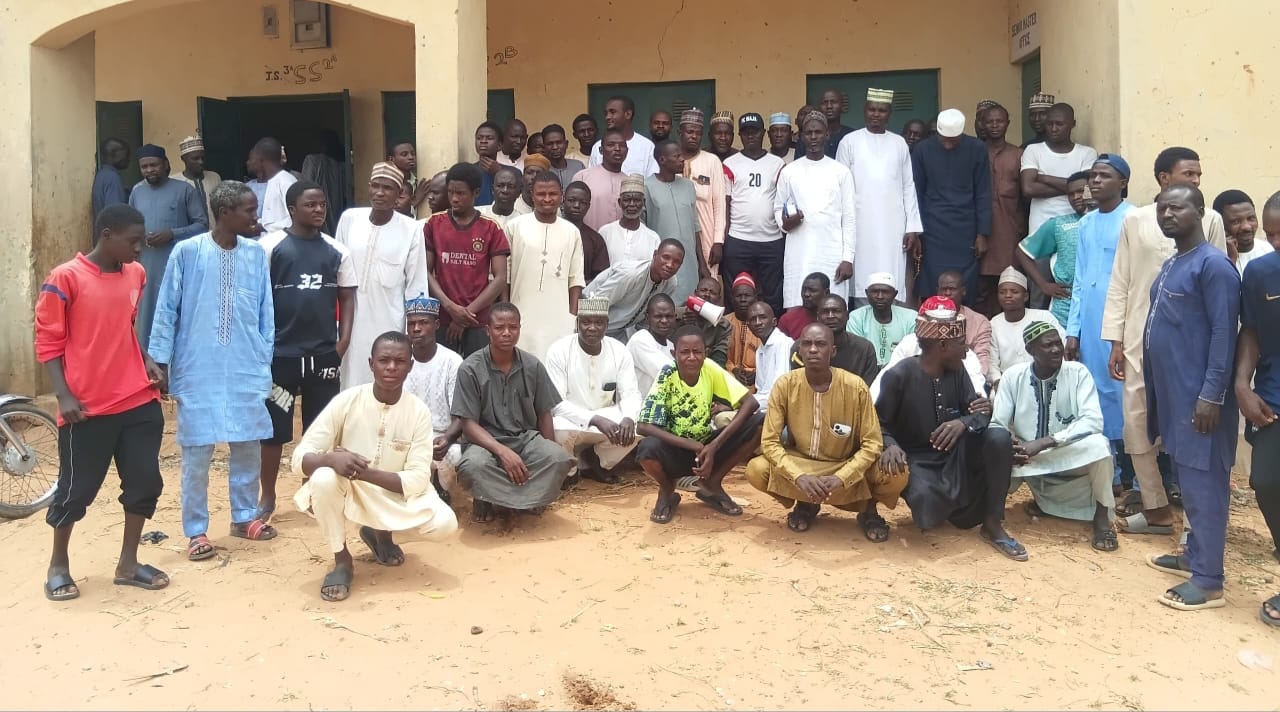
The Centre for Information Technology and Development (CITAD) has trained 120 men from different communities in Sumaila Local Government Area of Kano State on gender equality and prevention of gender-based violence (GBV).
The training was organised under the Male Feminists Network (MFN) zonal step-down programme, with support from the Ford Foundation through the African Centre for Leadership, Strategy and Development (Centre LSD).
Speaking at the training, Buhari Abba, a member of the CITAD MFN Project Team, said the initiative was aimed at mobilising men to become active advocates for gender equality and positive social change in their communities.
Abba said men had a critical role to play in addressing harmful gender norms and preventing violence against women and girls.
“Male feminism is about recognising that men have a responsibility to challenge harmful practices and promote equality, dignity and respect in our communities.
“We want participants to return to their communities as champions of positive change, speak against gender-based violence and encourage other men to embrace healthier and more respectful relationships,” he said.
He urged the participants to use their positions and influence to educate others and create greater awareness about the need to prevent GBV.
Also speaking, Haruna Adamu, who led the training, said the programme was designed to equip participants with the knowledge and skills needed to challenge discriminatory and harmful forms of masculinity.
Adamu said men must not remain silent when confronted with acts of violence, discrimination and other practices that undermined the rights and dignity of women and girls.
“Preventing gender-based violence is not the responsibility of women alone. Men must take ownership and become part of the solution.
“Through this training, we are building a network of men who can influence their families, friends and communities to reject violence and promote equality,” he said.
He explained that the participants had been registered as MFN champions and would serve as community advocates for gender equality and prevention of GBV.
According to him, each participant is expected to cascade the knowledge and advocacy messages acquired during the training to at least 50 people within his immediate community.
He said the approach would help expand the network and strengthen collective action by men toward creating safer, more inclusive and equitable communities.
The participants were also encouraged to promote respectful relationships, challenge harmful gender stereotypes and speak out against all forms of violence and discrimination.
The MFN is a two-year initiative aimed at mobilising men to confront harmful masculinities, promote gender equality and contribute to the prevention of gender-based violence across communities.