
By Amina Khalid
The Centre for Information Technology and Development (CITAD) has concluded the second edition of the Kano Labour Institute, a three-day training aimed at strengthening workers’ knowledge of labour rights and improving trade union education in Nigeria.
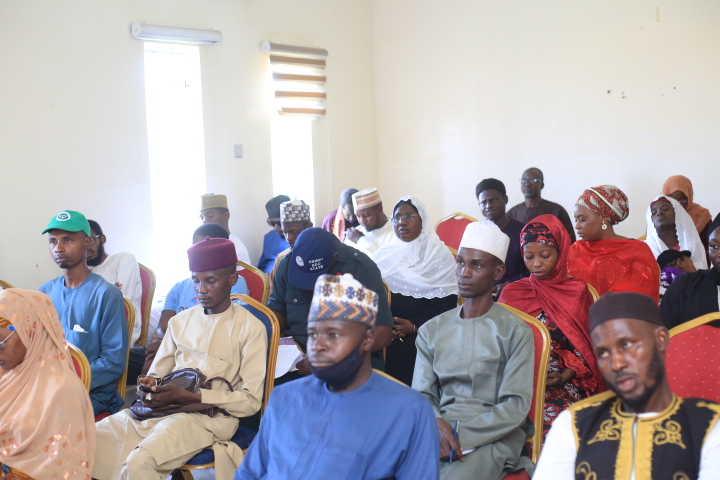
The institute, held at CITAD’s head office in Kano, had the theme, “Is Labour Education Drying Up?” and brought together trade unionists, labour activists, health workers, researchers and other stakeholders from across the country.
The programme featured lectures, panel discussions and a keynote address by veteran labour leader, Comrade Hassan Sunmonu. It also included motivational sessions by former Kano State Nigeria Labour Congress (NLC) Secretary, Auwalu Mudi Yakasai, and Professor Lukman Ibraheem Diso.
Speaking on the rationale for the institute, CITAD Executive Director, Y.Z. Ya’u, represented by Sani Mohamed Khamis, said the programme was organised to revive workers’ awareness of their rights and strengthen trade union and labour education.
Mr Khamis said the institute was also designed to equip workers with the knowledge and skills needed to defend their rights.
“The institute is designed to bring workers together, reorient them and remind them that they have rights which can be defended,” he said.
He said the theme was informed by concerns over the declining level of labour consciousness and education among Nigerian workers.
According to him, the problem could be traced to the colonial labour system, which was largely structured to serve the interests of government rather than workers.
He said successive governments after independence had, to a large extent, retained structures that prioritised the interests of the state and capital over workers’ welfare.
Mr Khamis also said increases in the national minimum wage were often undermined by inflation, thereby limiting the improvement in workers’ real purchasing power.
He said the institute brought experienced labour activists together with younger participants to facilitate the transfer of knowledge, experience and organising skills.
The first day featured sessions on the history of trade unions and unionism in Nigeria by former chairman of the Academic Staff Union of Universities (ASUU), Obafemi Awolowo University, Ile-Ife, Professor Omotoye Olorode.
Other sessions focused on fundamental rights of workers and cross-country experiences, facilitated by Ralph Gabin, and the role of trade unions in Nigerian democracy, facilitated by Murtala Mohammed.
The second day focused on the future of work and global transformations, globalisation and trade union struggles, the sociology of work, and gender and work.
The sessions were facilitated by Muttaqa Yusha’u Abdulra’uf, head of education and training at the NLC; Aminu Ali; Maikano Madaki; and Professor Amina Kaidal of the University of Maiduguri.
The final day featured sessions on principles and practices of negotiation and collective bargaining by Muazu Muazu of Bayero University, Kano; casualisation and informalisation of labour by Abdulkadir Isa; and employment and labour laws in Nigeria by Barrister Yushau Sani Yankuzo.
Participants said the training had broadened their understanding of labour organising and strengthened their commitment to defending workers’ rights.
Umar Musa Ahmad, a researcher, PhD student and activist, said the institute exposed gaps in the technical knowledge of some union leaders.
He said some people occupied union positions without adequate understanding of the responsibilities attached to their offices.
“Not every labour dispute has to end in a strike. Negotiation and engagement with other stakeholders are also important strategies,” Mr Ahmad said.
He said stronger collaboration was also needed between formal and informal sector workers because both groups faced challenges that required collective action.
A nurse with the Kano State Hospitals Management Board, Zainab Ali, said she attended the programme to strengthen her advocacy for health workers.
She said health workers were often left out of broader labour organising despite working under difficult conditions.
“Sometimes, nurses are left to attend to more patients than professional standards allow, without corresponding improvements in remuneration. This training has given us more knowledge on how to advocate for better conditions,” she said.
Ms Ali said she would share the knowledge acquired with her colleagues and encourage them to become more vocal in demanding better working conditions.
Similarly, Julius Emasalome, state secretary of the National Association of Nigerian Nurses and Midwives, Edo State Council, said the institute had deepened his understanding of working-class consciousness.
He said the training came at a time when the relationship between citizens and those in power had become increasingly strained.
“Continuous labour education is necessary because workers need to understand the forces shaping their working conditions and how they can organise effectively to protect their interests,” Mr Emasalome said.
He said he would incorporate the lessons from the institute into his organising activities at the state and local government levels.
Participants commended CITAD for bringing experienced labour leaders and younger activists together and called for more editions of the institute to expand its reach.
The second edition of the Kano Labour Institute ended with a call for sustained labour education to enable workers in both the formal and informal sectors to understand, claim and defend their rights.