
Amina Khalid
The Kano State Government’s ongoing rehabilitation of roads across the metropolis is easing years of hardship for motorists, commuters and traders, but blocked drainage channels and poor storm-water management are raising concerns about the durability of the projects.
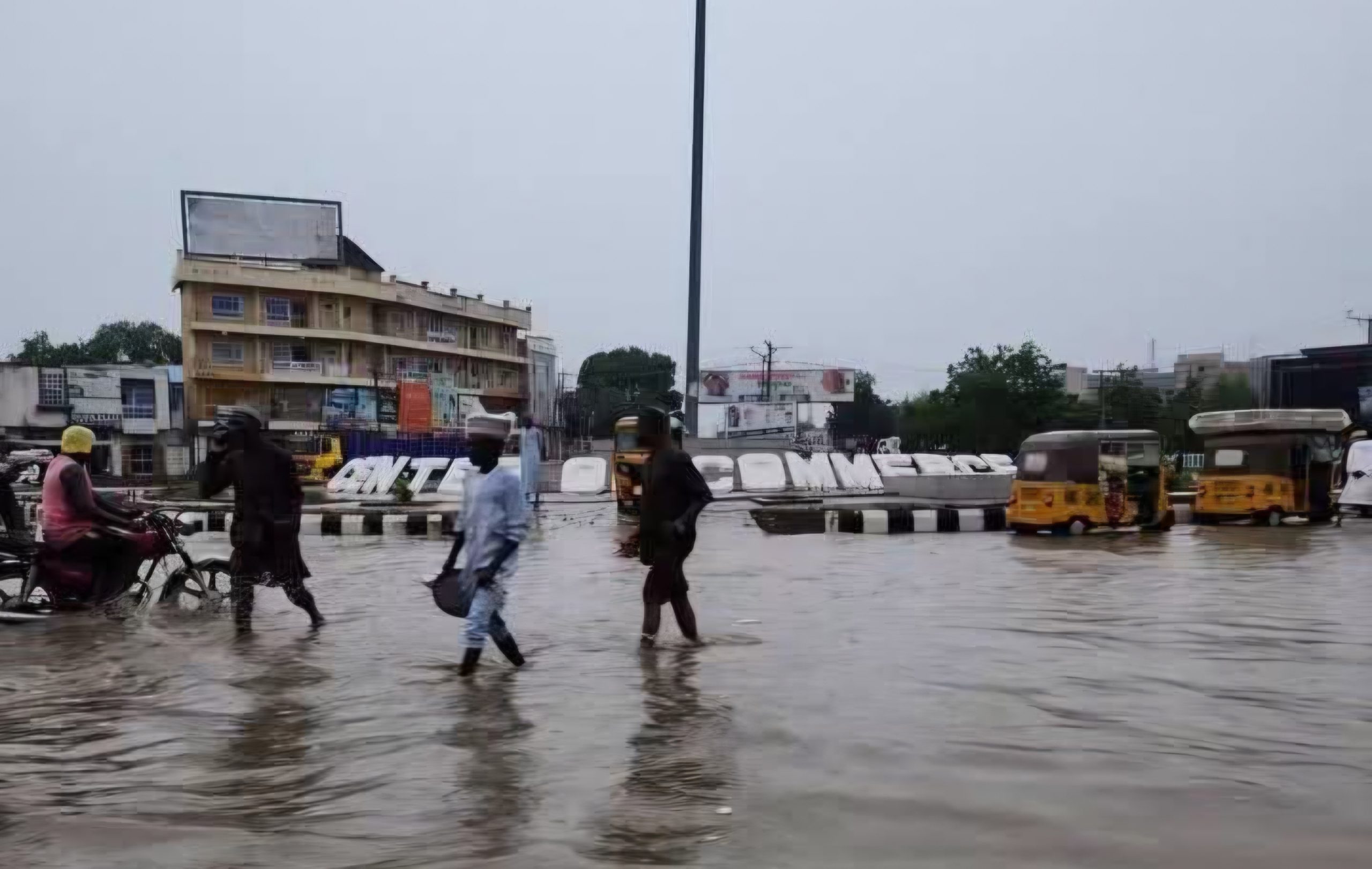
Across several parts of the city, residents and stakeholders say flooding during rainfall continues to expose roads to damage, while clogged drains, indiscriminate waste disposal and inadequate maintenance of waterways remain persistent problems.

The concern is particularly significant in a city where heavy rainfall can quickly overwhelm poorly maintained drainage systems.
Residents and urban development stakeholders interviewed for this report said road rehabilitation should not be treated as an isolated construction exercise. They argued that drainage, culverts, waterways and waste management must be addressed alongside road construction if the state is to protect its infrastructure investment.

The state government began a major road rehabilitation programme in March 2025, when it flagged off the reconstruction and rehabilitation of 17 roads across Kano metropolis.
The roads included major routes such as Club Road, Ashton Road, Airport Road and Murtala Muhammad Road.

The intervention has since expanded to other areas of the metropolis.
In February 2026, Governor Abba Kabir Yusuf ordered the immediate expansion and rehabilitation of roads around Singa Market, including Bello Road, Ado Bayero Road, Kandoki, Yolawa and Kwangiri roads.

The government said the intervention was intended to improve movement, support commercial activities and address some of the infrastructure challenges around one of the city’s major commercial centres.
Another major project is the reconstruction of the 3.6-kilometre Zungeru Road in Sabon Gari, which connects Airport Road through No Man’s Land to the Hajj Camp area.
The projects have generated relief in communities that had endured potholes, deteriorating road surfaces and traffic congestion for years.
But residents say the benefits could be short-lived if the drainage systems serving the roads are not given similar attention.
Water is among the biggest threats to road infrastructure, particularly where drainage channels are blocked or inadequate.
Engr. Kabiru Musa Bichi, an engineer familiar with road infrastructure and drainage challenges, said the durability of road projects depends significantly on how effectively storm water is channelled away from road surfaces and foundations.
He explained that where drainage is inadequate or blocked, accumulated water can weaken road foundations, accelerate the formation of potholes and eventually damage road surfaces, including newly rehabilitated sections.
According to him, drainage assessment should form part of every major road rehabilitation project rather than being treated as a separate intervention.
This is already a concern in parts of Kano metropolis.
Residents around Baban Gwari Roundabout and Katsina Road in Fagge Local Government Area have repeatedly raised concerns about flooding during rainfall.
In June 2025, residents in the area called for urgent clearance of drainage channels ahead of the rainy season, identifying Baban Gwari Roundabout as one of the flood-prone areas.
The area forms part of the Jakara-Kwarin Gogau storm-water system. Although the need to improve the system has been acknowledged by authorities, residents say they are yet to see the level of intervention required to address the problem permanently.
The situation is also a concern in Rijiyar Zaki, where residents say some drainage channels have effectively become dumping grounds for household waste.
Malam Auwal Sani, a resident, said the practice was worsening the community’s vulnerability to flooding.
“When drains are filled with refuse, rainwater has nowhere to go. The water eventually enters the streets and compounds,” he said.
The problem is not confined to residential neighbourhoods.
At the Kantin Kwari Market axis, traders have for years faced the consequences of obstructed drainage channels.
Aliyu Muhammad, a businessman at Kwari Market, said flooding and blocked drainage remained a concern for businesses operating in the area.
He said traders were worried that accumulated refuse and materials blocking drainage channels could worsen flooding during periods of heavy rainfall.

“Traders need the roads and drainage channels to function together. If the road is repaired but the drainage remains blocked, the same problem will return when the rains become heavy,” Mr Muhammad said.
Authorities have repeatedly urged traders and residents to remove structures, goods and other materials obstructing drainage routes around the market.
The 6.7-kilometre Wuju-Wuju/Jakara road network, which cuts across Dala, Gwale, Municipal and Fagge local government areas, has similarly experienced seasonal flooding associated with inadequate drainage.
The recurring flooding along the route has become one of the challenges associated with the road, prompting renewed attention to its reconstruction.
Bello Hassan, a resident of the Jakara-Wuju-Wuju corridor, said flooding remains a major concern for residents whenever rainfall becomes intense.
He said residents were particularly concerned that improvements to the road would not be sustainable unless the drainage infrastructure serving the corridor was also addressed.
According to him, the recurring accumulation of water demonstrates the need for authorities to examine the entire drainage network rather than focusing solely on the road surface.
For urban development stakeholders, the recurring flooding highlights a fundamental weakness in the way road projects are sometimes approached.
Engr. Bichi said a road should be viewed as part of a wider infrastructure system involving drainage channels, culverts and waterways.
“Road rehabilitation without proper drainage is incomplete,” he said, stressing that water must be effectively removed from road surfaces and foundations to protect public investment.
Kano has previously undertaken road rehabilitation projects alongside drainage-clearing exercises, including interventions around Aminu Kano Way, Lodge Road, Tarauni Road, Airport Road and Kano Government House Road.
But the continued recurrence of flooding in some areas, stakeholders said, demonstrates the need for a more sustained approach.
They said drainage maintenance should begin before roads are rehabilitated and continue throughout the lifespan of the infrastructure.

The drainage challenge is also closely linked to waste management.
Residents frequently dispose of plastic bottles, food waste, sand and other refuse in drainage channels. During rainfall, the waste blocks the movement of water and contributes to flooding.
Beyond damaging roads and public infrastructure, stagnant flood water can create conditions favourable to mosquitoes and other disease vectors.
Stakeholders therefore say government intervention must go beyond periodic removal of silt and refuse.
They are calling for stronger enforcement against dumping in waterways, sustained public education on responsible waste disposal and regular monitoring of drainage channels by communities and relevant government agencies.
The Kano State Government announced in 2025 that it would undertake annual drainage clearance exercises as part of a broader plan to strengthen the metropolis against flooding.
The challenge, however, is ensuring that such interventions are sustained.
Stakeholders say drainage clearance should not become an emergency exercise conducted only after heavy rainfall has already caused flooding.
Instead, desilting and inspection should become routine maintenance activities.
They also called for existing culverts to be assessed during road rehabilitation projects, with damaged or undersized structures replaced where necessary.
A more coordinated approach, they said, would require agencies responsible for roads, drainage, environment and waste management to work together rather than addressing their responsibilities separately.
While much of the responsibility rests with government, stakeholders acknowledged that residents also have a critical role in protecting public infrastructure.
They urged communities to stop using drainage channels as refuse dumps and to report blocked waterways before they become serious flooding points.
Community-based monitoring, they said, could help authorities identify vulnerable locations early and respond before rainfall turns blocked drains into emergencies.
As rainfall continues across Kano, flooding around Katsina Road, Baban Gwari, Rijiyar Zaki, Kantin Kwari and the Jakara-Wuju-Wuju corridor illustrates the scale of the challenge.
The state’s road rehabilitation programme has the potential to significantly improve mobility and stimulate economic activity across the metropolis. But stakeholders say the sustainability of those gains will depend largely on what happens beneath and beside the roads.
The message from communities and technical stakeholders is clear: road rehabilitation must go hand in hand with effective drainage planning, maintenance and responsible waste management.
This special report was produced by CITAD Online Radio as part of its coverage of environmental governance, climate resilience and community development issues affecting underserved communities in Kano State.