
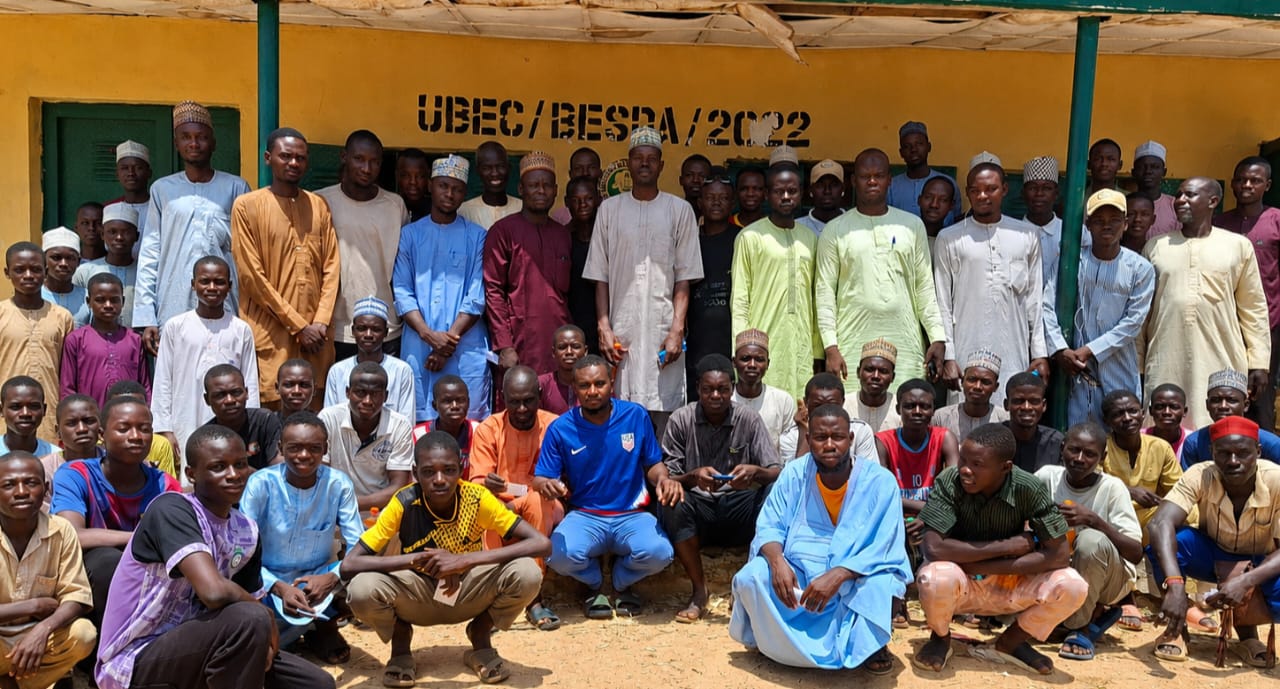
The Centre for Information Technology and Development (CITAD) has mobilised members of the Kano South Bus Drivers Association and the Rano Safe Communities and Accountability Initiative (RSCAI) to help prevent gender-based violence and promote gender equality.
The training, held on Sunday in Rano Local Government Area of Kano State, was organised under the Male Feminists Network (MFN) Project, with support from the Ford Foundation through the African Centre for Leadership, Strategy and Development (Centre LSD).
The programme focused on helping men challenge harmful gender norms, prevent gender-based violence and promote the rights of women and girls.
Usman Abdullahi, a participant in CITAD’s MFN training and chairman of RSCAI, who led the step-down training, urged participants to become advocates for gender equality in their communities.
He also challenged each participant to reach at least 50 people with the message, saying this would help broaden efforts to prevent gender-based violence.
“Preventing gender-based violence is not only the responsibility of women. Men have an important role to play by speaking against violence, discrimination and harmful practices,” Abdullahi said.
“We have received knowledge here, and our responsibility now is to take the message to others. If every participant reaches at least 50 people, we can create a much wider impact in our communities.”
Buhari Abba, communications officer of the MFN Project and representative of the CITAD executive director, urged the participants to become MFN champions in their communities.
Abba said the training should be seen as a starting point for mobilising more men to support efforts to prevent gender-based violence.
“You are now expected to become MFN champions in your respective communities. Your responsibility is to take this message beyond this hall and engage other men,” he said.
“Men must understand that promoting gender equality is not a threat to them. It is about building communities where everyone, particularly women and girls, can live with dignity, safety and equal opportunities.”
Abba also urged participants to challenge harmful beliefs and practices and use their positions as drivers, community members and opinion leaders to promote positive attitudes towards women and girls.
“Change starts with individuals. When one man speaks against violence, another man may be encouraged to do the same. That is how we can gradually change harmful norms in our communities,” he said.
Kabiru Auwalu, a participant, said the training had broadened his understanding of the role men could play in preventing violence against women and girls.
“I have learnt that men should not remain silent when they see violence or discrimination against women. We have a responsibility to speak out and support victims of violence,” he said.
“I will take what I have learnt here to other people in my community and encourage them to reject harmful practices.”
Another participant, Suleiman Lawan Suleiman, said the training had equipped him with knowledge that he would share with other men.
“This training has taught us that gender equality is a responsibility for everybody. Men can become part of the solution by changing the way they think and by discouraging violence and discrimination,” he said.
“I will share the knowledge with other members of my community and encourage them to support the campaign for a violence-free society.”
Participants said they were ready to replicate the training in their communities and support initiatives aimed at preventing gender-based violence and promoting the rights of women and girls.