
Buhari Abba & Ali Sabo
Despite being home to Africa’s largest economy, Nigeria remains one of the world’s most dangerous places for pregnant women. In Kano State, where maternal mortality is among the highest in the country, the crisis is no longer reflected only in statistics — it is etched into the lives of grieving families and isolated rural communities.
For Malam Ibrahim Musa, the pain remains fresh.
His wife died in labour on a dark night as he struggled to take her to a hospital outside their community in Dadin Kowa, Wudil Local Government Area of Kano State.
“My wife developed complications during labour in the middle of the night. We had to look for a vehicle to take her to Lajawa because there is no hospital here,” Mr Musa recalled quietly.
“Because of the bad road, the journey became difficult. Before we reached the hospital, she died on the way. This is not the first time such a thing has happened in this community.”

His story captures the daily reality in many rural communities across Kano, where poor roads, the absence of healthcare facilities, and weak public infrastructure continue to endanger lives.
Alarming maternal mortality figures
Research shows that maternal and infant mortality rates in Nigeria are highest in the North-east and North-west geopolitical zones, while the South-east and South-west record comparatively lower figures.
Kano State currently has the country’s highest maternal mortality rate at 377.8 deaths per 100,000 live births — far above the national target of 288 per 100,000 live births.
Recently, the United Nations Children’s Fund (UNICEF) raised concerns over the growing burden of maternal and child mortality in Kano, particularly in 18 local government areas identified as high-risk zones.
Speaking during a state-level training on maternal, neonatal and child mortality reduction in Kano, UNICEF Nigeria’s Chief of Field Operations and Emergency, Judith Leveillee, described the situation as a major public health challenge.
She said only about 50 per cent of pregnant women in the state are attended to by skilled healthcare providers, while just 36 per cent deliver with the assistance of skilled birth attendants.
According to her, neonatal deaths account for 59 per cent of mortality cases, while under-five mortality also remains significantly high.
Ms Leveillee said the figures underline the urgent need for coordinated and sustainable healthcare interventions across affected communities.
She explained that UNICEF, in collaboration with the National Primary Health Care Development Agency and the Kano State Government, is implementing the Maternal, Neonatal and Child Mortality Reduction Innovation Initiative (MAMII) to address the crisis.
A community cut off from healthcare
In Dadin Kowa, however, many residents say little has changed.
The community lacks a functional primary healthcare centre, forcing residents to travel more than 10 kilometres to Lajawa whenever medical emergencies arise.
For pregnant women, the situation is particularly dangerous.
During a visit to the area, residents described how women in labour are often transported on motorcycles through rough and eroded roads, especially at night or during the rainy season.
In some cases, they said pregnant women are tied to motorcycles to prevent them from falling during the difficult journey.
One resident, Fiddausi Sa’adu, reportedly went into labour while being transported to Lajawa and delivered her baby under a tree along the road.
Another resident, Bala Muhammad, said accessing healthcare during emergencies has become a nightmare for families in the area.
“When labour starts suddenly at night, transporting pregnant women becomes a serious challenge because of the road,” he said.
“Sometimes motorcycles are the only means available, and in cases of complications, lives are lost before reaching the hospital.”

A visit by CITAD Radio showed that the road leading to the community is riddled with potholes and badly eroded sections, making movement difficult, particularly during the rainy season.
Questions over public funds
The condition of the community has raised concerns among residents, especially given the allocations received by Wudil Local Government Area in recent years.
Available records show that the local government received about N13.2 billion from the Federation Account Allocation Committee (FAAC) within three years.
Of the amount, approximately N4.2 billion was reportedly spent on salaries, N1.8 billion on recurrent and administrative expenditures, while N7.2 billion was earmarked for development projects.
Yet residents say there is little evidence of such projects in Dadin Kowa.
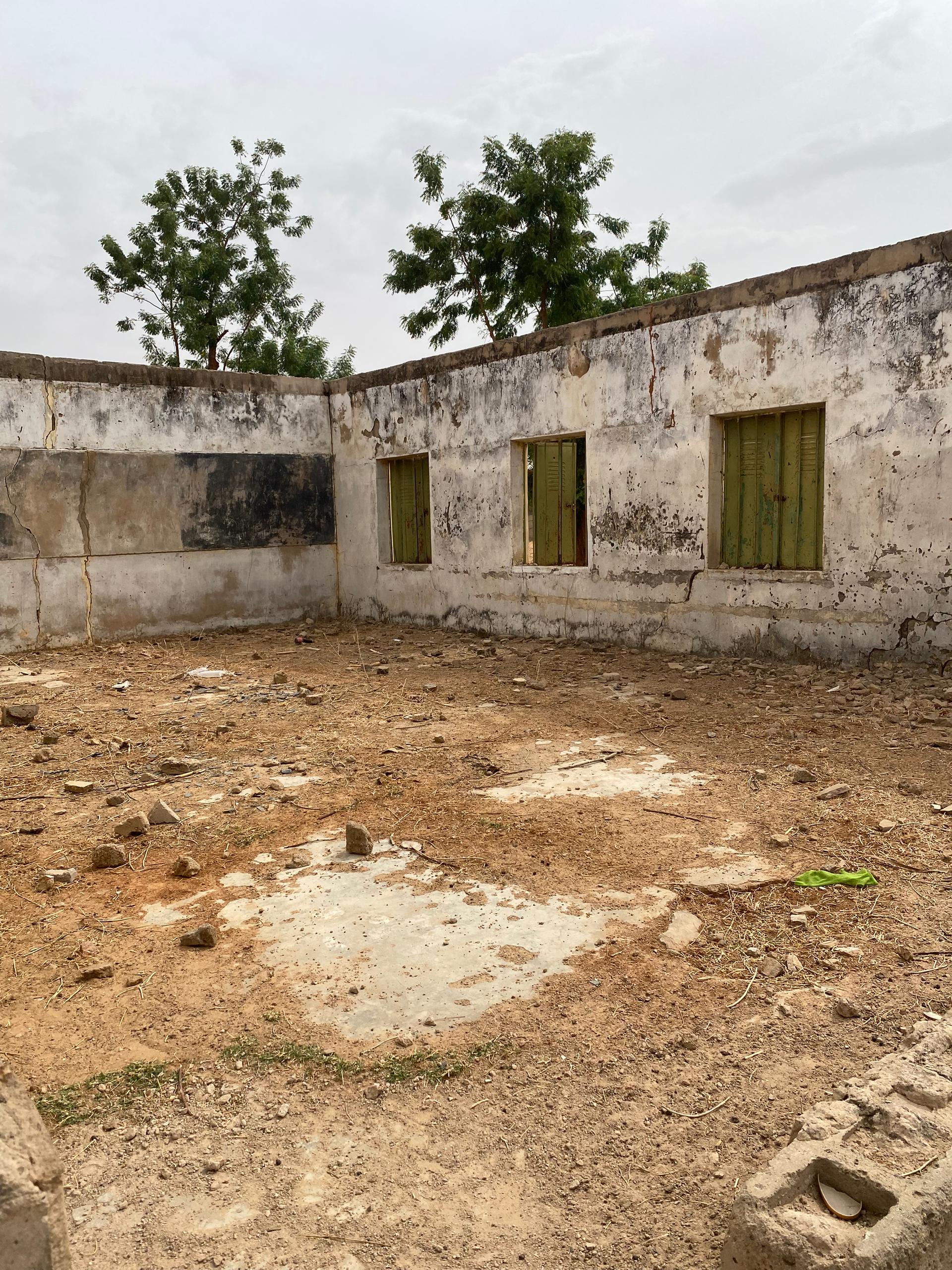
Beyond healthcare challenges, the community’s educational infrastructure is also in poor condition.
The only primary school serving the area has damaged walls, leaking roofs and overcrowded classrooms.
Some pupils were seen sitting on the floor during lessons because of a shortage of furniture.
Residents also lamented the absence of a secondary school, saying many children either abandon their education after primary school or travel long distances to neighbouring communities.
“Our children are suffering because there is no proper learning environment,” a community leader, Alhaji Sani Garba, said.
“The roofs of some classrooms are damaged, and whenever it rains, pupils are forced to stop classes and run home. We have repeatedly appealed for intervention, but nothing has changed.”
Ms Muhammad said the absence of a nearby secondary school has worsened school dropout rates among girls.
“Many parents cannot afford transportation for their children to schools outside this area,” she said.
“Some girls end up getting married early because there is no nearby secondary school for them to continue their education.”
Farmers trapped by bad roads
The impact of the failing infrastructure also extends to agriculture, the main source of livelihood in the community.
Dadin Kowa is regarded as one of Kano State’s important agricultural hubs, producing rice, onions, peppers, watermelon and carrots supplied to markets within Kano and beyond, including Lagos.
But farmers say transporting produce has become increasingly difficult because of the deplorable road network.
“We are farmers, but transporting our produce to markets is difficult because vehicles hardly come here,” a farmer, Bashir Ado, said.
“During the rainy season, some parts of the road become impassable. This affects our livelihoods and the prices we get for our goods.”
Residents said buyers often refuse to enter the community because of the poor condition of the road, forcing farmers to move produce to nearby villages using carts before transportation can be arranged.
The Chairman of the Makera Community Development Association, Nura Mansur Idris Tandawa, said years of neglect have left residents frustrated and disillusioned.
According to him, repeated promises by politicians during election campaigns have failed to translate into meaningful development.
Residents said the road has remained neglected for about 19 years despite repeated appeals for rehabilitation.
Threat to boycott elections
The growing frustration has now pushed some residents to threaten to boycott the 2027 general elections.
They say successive governments have failed to provide basic amenities such as roads, schools and healthcare facilities.
For many residents, the worsening infrastructure crisis has become more than an issue of development; it has become a question of survival.
The Chairman of Wudil Local Government, Abba Muhammad Tukur, said the council had submitted proposals to the relevant ministry and was awaiting approval from the governor for intervention projects.
But for grieving families like that of Ibrahim Musa, promises offer little comfort.
Residents are now calling on the Kano State Government and Wudil Local Government Council to urgently rehabilitate the road linking the community to neighbouring areas, construct a functional healthcare centre, and improve educational infrastructure.
“We are not asking for too much,” Mr Garba said.
“We only want basic things that will make life easier for our people — good roads, schools and a hospital. These are necessities every community deserves.”