
Ali Sabo & Buhari Abba
There was tension, grief and widespread destruction in parts of Wudil Local Government Area of Kano State following a violent confrontation between security operatives and residents of Katai and Fauda villages, with many people feared dead and properties worth millions of naira destroyed.
The incident, which occurred in late March 2026, has thrown the agrarian communities into mourning. Residents said it stemmed from a lingering land dispute involving some indigenous Hausa families and a Fulani traditional titleholder, identified as Alhaji Musa Dan Fulani, who allegedly laid claim to vast portions of farmland belonging to the villagers.
Residents who spoke to CITAD Radio said the dispute had been brewing for weeks, escalating after affected families refused to cede the land, insisting it belonged to their forefathers.
“We have been farming on this land for generations. Suddenly, someone came to say it now belongs to him. How can that be?” one of the villagers, Malam Ibrahim Sani, said.
Another resident, Aisha Lawan, said the community had earlier reported the matter to local authorities, but no concrete action was taken before the crisis escalated.
Sources said the situation turned violent when armed men, believed to be security operatives, stormed the villages at night.
Eyewitnesses, including a youth leader, Sadiq Garba, said the attackers, dressed in plain clothes, arrived in large numbers and began shooting sporadically.
“At first, we thought they were bandits because they were not in uniform and they came at night shooting. People started running in different directions,” Mr Garba said.
In the ensuing chaos, villagers reportedly mobilised in self-defence, using sticks, cutlasses and other local weapons.
During the confrontation, a resident identified as Bashir Muhammad was reportedly shot. Villagers also overpowered and killed one of the attackers, believing he was a bandit.
However, the situation escalated after authorities later identified the deceased as a security operative, triggering what residents described as a reprisal.
Community sources alleged that security personnel returned in greater numbers and carried out a retaliatory operation that left a trail of destruction.
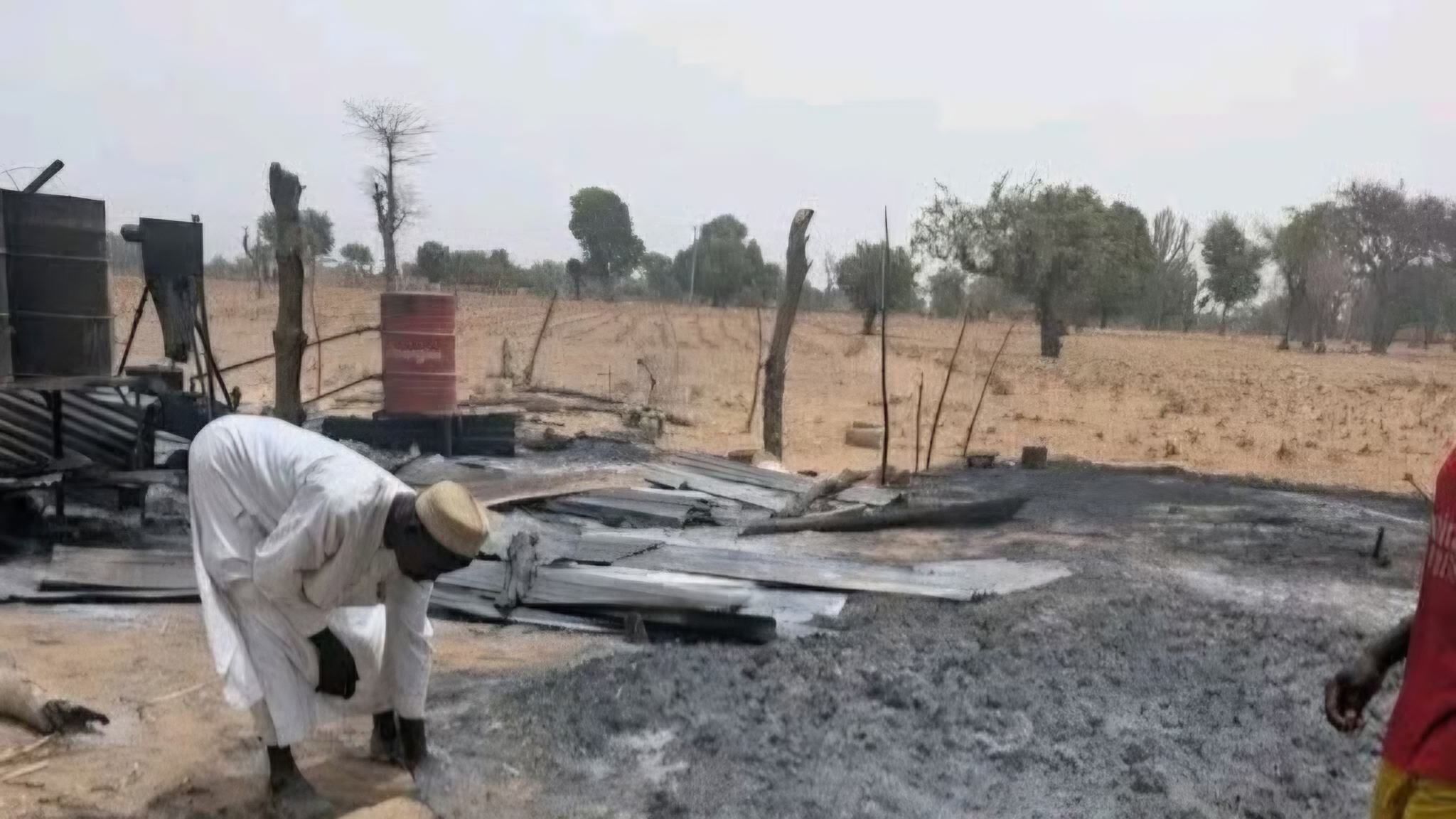
A community elder, Shehu Abdullahi, said several houses were set ablaze, with entire compounds reduced to ashes. Eyewitnesses said no fewer than 30 houses were burnt, while more than 100 livestock, including cows, goats and sheep, were either killed or taken away.
“We lost everything—our homes, our food, our animals. People are now sleeping in the open,” a resident, Zainab Musa, said.
The violence forced many families, including women, children and the elderly, to flee to neighbouring communities.
As of the time of filing this report, the exact number of casualties remains unclear. However, multiple sources, including a local vigilante member, Nasiru Bello, said several people were feared dead, while others sustained injuries.
The Chairman of Wudil Local Government Area, Abba Muhammad Tukur, confirmed the incident, describing it as unfortunate.
In a statement issued through his spokesperson, Abba Darki, Mr Tukur said efforts were ongoing to restore calm and investigate the circumstances surrounding the clash.
“We appeal to all parties to remain calm and allow the authorities to carry out a full investigation. Justice will be served without fear or favour,” the statement said.
Attempts to get official confirmation from the Nigeria Police Force spokesperson in Kano, Abdullahi Haruna Kiyawa, were unsuccessful as calls and messages were not responded to as of press time.
Residents have called on the Kano State Government under Governor Abba Kabir Yusuf to intervene urgently amid fears of further violence.
Legal concerns
Legal practitioners said the incident reflects deeper structural issues in Nigeria’s land administration system.
A Kano-based lawyer, Sani Abdullahi, said the country’s land ownership system remains complex and often contentious.
He explained that while the Land Use Act vests land in each state in the governor, customary ownership and communal inheritance practices still dominate in many rural communities.
“On paper, the governor controls land, but in reality, families and communities still see land as ancestral property. This dual system creates confusion and, in many cases, conflict,” he said.
Mr Abdullahi advised that such disputes could be better managed through early legal intervention and proper documentation.
“Parties should obtain valid titles such as Certificates of Occupancy, and where disputes arise, they should seek redress in court or through alternative dispute resolution mechanisms instead of resorting to violence,” he said.
Another legal expert, Hauwa Bello, emphasised the role of traditional institutions and mediation.
“In many northern communities, emirs, district heads and village heads still play a critical role. Engaging them early can prevent escalation. Government should also strengthen local dispute resolution systems,” she said.
Ms. Bello, warned against the use of force in handling civil disputes.
“Even where there is enforcement, it must follow due process. Any operation that leads to loss of innocent lives and destruction of property raises serious legal and human rights concerns,” she said.
Observers say the incident highlighting growing tensions around land ownership and grazing rights in parts of northern Nigeria, where disputes between farmers and herders have increasingly turned violent.
For now, Katai and Fauda villages remain in mourning, with charred homes, deserted compounds and displaced residents struggling to cope with the aftermath, even as calls intensify for justice and lasting solutions.