
Buhari Abba
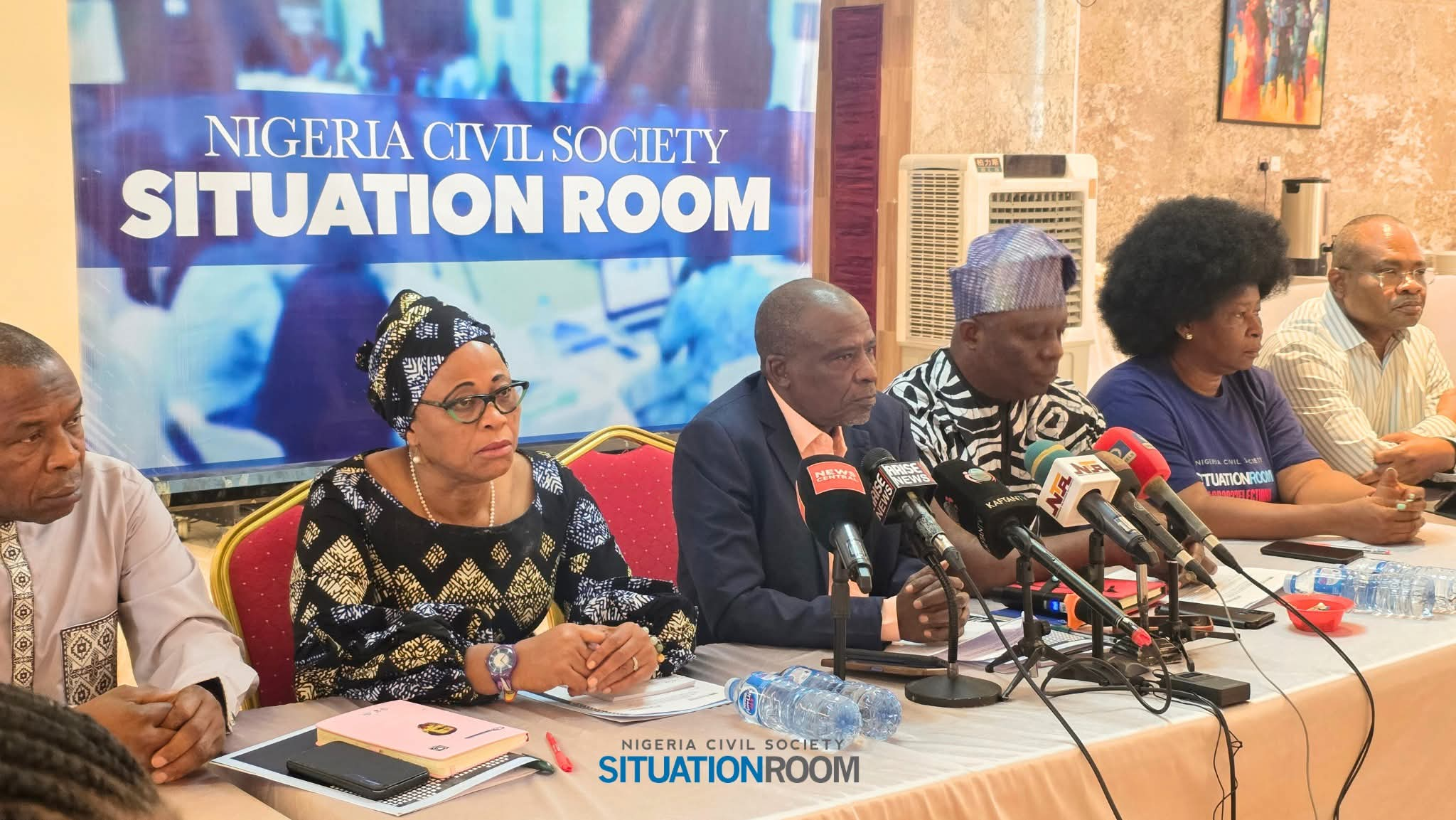
The Nigeria Civil Society Situation Room has criticised the National Assembly over the continued delay in passing the Electoral Act (Amendment) Bill, warning that the postponement threatens Nigeria’s electoral reform process ahead of the 2027 general elections.
In a statement signed by its Convener, Yunusa Zakari Ya’u, the group expressed concern that the Senate has yet to conclude action on a bill already passed by the House of Representatives, while the National Assembly remains on recess into 2026.
The House had passed the Electoral Act (Amendment) Bill at third reading on December 23, 2025, with the bill aiming to address gaps identified in recent elections, including electronic transmission of results, early voting, and stricter penalties for electoral offences.
Ya’u noted that despite being passed at second reading on October 22, 2025, the Senate failed to complete action on the bill.
“The bill was reportedly stepped down over procedural issues and was not returned for final consideration before the Senate adjourned for the end-of-year recess. The joint committees of both chambers had publicly committed in October 2025 to ensure passage of the bill before the end of the year,” the statement partly read.
He emphasised that electoral reform is not routine legislation, stressing that the delay reflects “poor prioritisation, weak inter-chamber coordination, and a troubling disregard for Nigeria’s electoral timelines.”
Ya’u warned that the delay could disrupt preparations by the Independent National Electoral Commission (INEC), which is required by law to issue the Notice of Election in February 2026.
“INEC is legally required to issue the Notice of Election in February 2026. Situation Room stresses that for INEC to plan, implement, and sensitise stakeholders under a revised legal framework, the Electoral Act (Amendment) Bill must be passed and assented to well before then. Any further delay… places the entire 2027 election cycle at risk,” he said.
The convener also recalled the 2022 Electoral Act Amendment Bill, noting that it failed to receive presidential assent in time due to late transmission.
He criticised the prolonged legislative recess, comparing Nigeria’s situation with other democracies where parliaments resume early despite urgent national issues.
“The prolonged National Assembly recess, noting that legislatures in other democracies do not remain inactive when urgent national priorities are outstanding. It pointed out that the UK Parliament resumed sittings on 5 January 2026 and that the US Congress is constitutionally required to reconvene on 3 January each year,” he said.
Ya’u warned that continued delay could result in uncertainty in the electoral legal framework, delayed voter education, operational setbacks for INEC, and increased risk of electoral disputes.
He urged the National Assembly to take immediate action, saying:
“We call on the National Assembly, and particularly the Senate, to: Immediately prioritise and pass the Electoral Act (Amendment) Bill upon resumption on 27 January 2026 without further delay.
“Ensure immediate transmission of the Bill to the President for assent upon passage, so the revised legal framework is in force well ahead of the 2027 General Elections.
“Strengthen inter-chamber coordination between the Senate and the House of Representatives to prevent further legislative bottlenecks on priority national legislation.
“Credible elections are the foundation of democratic governance and national stability. Nigeria cannot afford to drift into another election cycle with unresolved legal uncertainties.”