
Zainab Usman Salihu
Graduates of a youth-led accountability fellowship have raised the alarm over worsening healthcare conditions in parts of Northern Nigeria, blaming poor oversight, weak accountability, and limited community participation for persistent gaps in primary healthcare services.
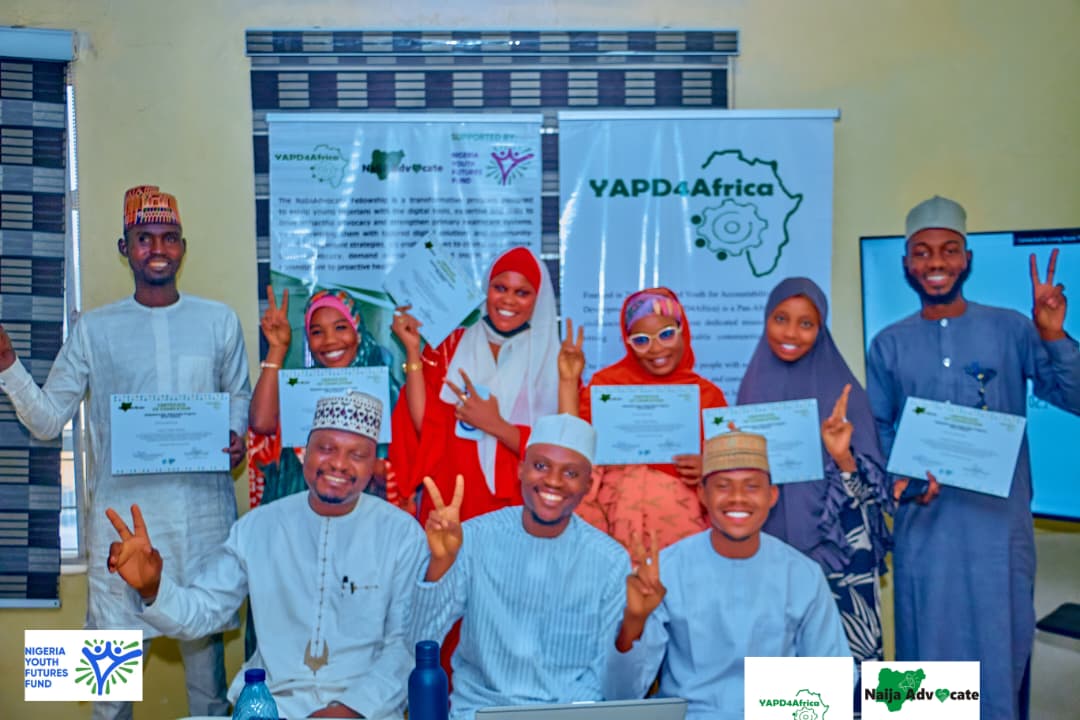
The concerns were raised by fellows of the Youth for Accountability, Peace and Development Initiative (YAPD4Africa) during the graduation ceremony of the Naija Advocate Fellows held in Kano.
The fellows were trained under the Niger Advocates Project, an initiative implemented by YAPD4Africa with support from the Nigerian Youth Future Fund (NYFF), aimed at strengthening citizen-led monitoring of healthcare service delivery.
Speaking at the event, the Founder and Chief Executive Officer of YAPD4Africa, Mr. Idris Bilyaminu, said the fellowship was conceived in response to long-standing challenges affecting access to quality primary healthcare, particularly in Kano State and other parts of Northern Nigeria.
Bilyaminu noted that despite the release of funds through the Basic Health Care Provision Fund (BHCPF), many communities continue to experience poor healthcare services due to mismanagement and weak accountability systems.
“There have been funds released to strengthen the healthcare sector, but people are still suffering because access remains poor and resources are not properly managed,” he said.
“This project is our response to that challenge.”
According to him, the Niger Advocates Project focuses on equipping young people with skills to serve as accountability champions, enabling them to monitor healthcare facilities, engage authorities, and mobilise communities to demand better services.
He explained that the fellows underwent a three-month intensive training covering engagement with government institutions and health providers, community mobilisation, tracking healthcare services using practical tools, and promoting transparency in the management of public health funds.
Bilyaminu added that research conducted by the fellows during the project revealed cases of mismanagement of the BHCPF at both service delivery points and government oversight levels.
“This reinforces the need for citizen-led monitoring and stronger community involvement in healthcare governance,” he said.
To sustain the impact of the project beyond the training phase, Bilyaminu disclosed that YAPD4Africa provided mini-grants to the fellows, who were grouped into three teams to implement community-based projects focused on improving healthcare accountability.
“We are supporting these young advocates financially and technically so they can continue this work in their communities,” he added.
One of the fellows, Ms. Zainab Abubakar Inuwa, a licensed community health practitioner, described the fellowship as a life-changing experience.
“Before this fellowship, many of us didn’t know how to engage our communities or advocate effectively,” she said.
“Now we understand community participation, inclusion, and how to raise issues affecting women and girls, especially in healthcare.”
She noted that the blend of virtual and physical training sessions over the three-month period strengthened collaboration among participants and enhanced their advocacy skills.
Bilyaminu also called on local and state governments to place citizens’ rights and needs at the centre of healthcare planning and implementation.
“Government officials must remember they are representing people with lives, rights, and needs,” he said.
“Serious action is needed at the local level because people are truly suffering.”
He further revealed plans by YAPD4Africa to replicate the Niger Advocates model in other states across the North-West and beyond, in partnership with development organisations.
According to him, youth-led initiatives such as the Niger Advocates Project demonstrate the critical role young people can play in bridging the gap between healthcare policies, funding, and the realities faced by communities.