
By Amina Khalid
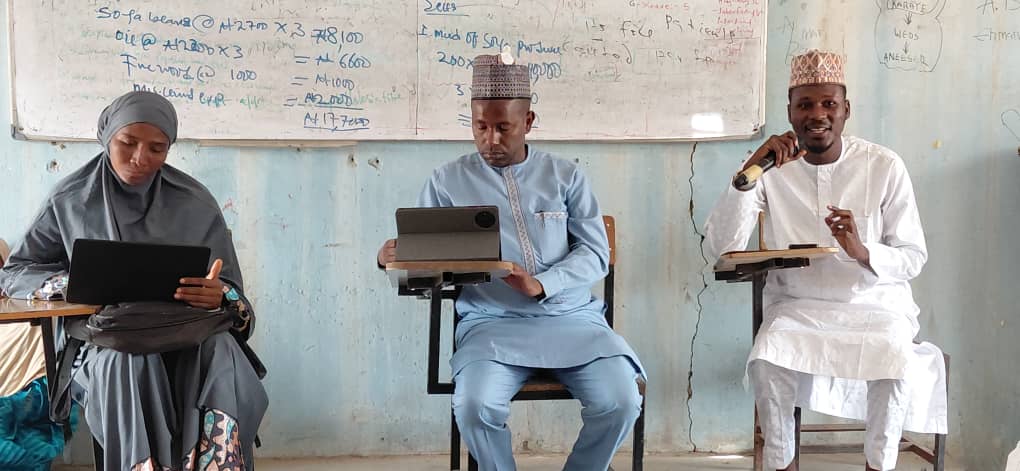
As part of activities to commemorate the 2025 World Press Freedom Day, the Centre for Information Technology and Development (CITAD) organized a sensitization session for students of Mass Communication at Kano State Polytechnic, focusing on the intersection of artificial intelligence (AI) and press freedom.
The event held at the School of Continuing Education and Post Graduate Studies was themed: “The growing influence of artificial intelligence (AI) on journalism and its implications for press freedom globally.”
In his presentation, CITAD’s Digital Rights Officer, Ali Sabo, warned that while AI can boost productivity in newsrooms, it also poses significant risks to journalism ethics and job security. “AI lacks human judgment, and that opens the door to misinformation, misrepresentation, and even job displacement within the media industry,” he said.
Sabo urged the students to build strong editorial and digital skills to stay relevant in a fast-evolving media landscape. “Be innovative, stay curious, and learn how to make technology work for you. Don’t let it replace you,” he added.
Also speaking at the event, Ali Isa of MetroGate Innovations noted that AI technologies are already performing journalistic roles in several countries—a trend that is gradually gaining ground in Nigeria “We’re heading into a future where journalists might shift from writing the news to overseeing content produced by AI,” he observed. “Journalism must stay rooted in human judgment, thoroughly verified, fair, and responsible.”
Salihu Sule Khalid, a lecturer in the Department of Mass Communication, Kano State Polytechnic highlighted the potential dangers of adopting AI without critical engagement. He said AI could marginalize minority voices and undermine media pluralism. AI can amplify dominant voices while silencing others, which is dangerous for press pluralism and democratic engagement,” Khalid stated.
Another speaker, Maryam Muhammad, a lecturer at Maryam Abacha American University of Nigeria, emphasized that the ethical responsibility of journalists remains unchanged, regardless of the tools at their disposal. The issue isn’t with the tool itself but how we use it. Responsible journalism is still anchored on human values—truth, fairness, and accountability,” she said.
Some of the students expressed concern over the implications of AI for their future careers.
“Before today, I thought AI was something distant from us. Now I realize it will influence my future as a reporter,” said Khadija Ishaq, a National Diploma student. Salisu Ado Sulaiman, called for proactive regulation and accountability. “If we don’t monitor AI carefully, it could erode public trust in journalism. As future journalists, our duty is to hold both governments and technology accountable,” he noted.
The session concluded with a collective appeal for the responsible integration of AI in journalism, stressing that while technological progress is welcome, it must not come at the cost of ethical standards and credibility.